History
Fashions of the past and famous faces. 90 face guides on EveryFaceShape so far.
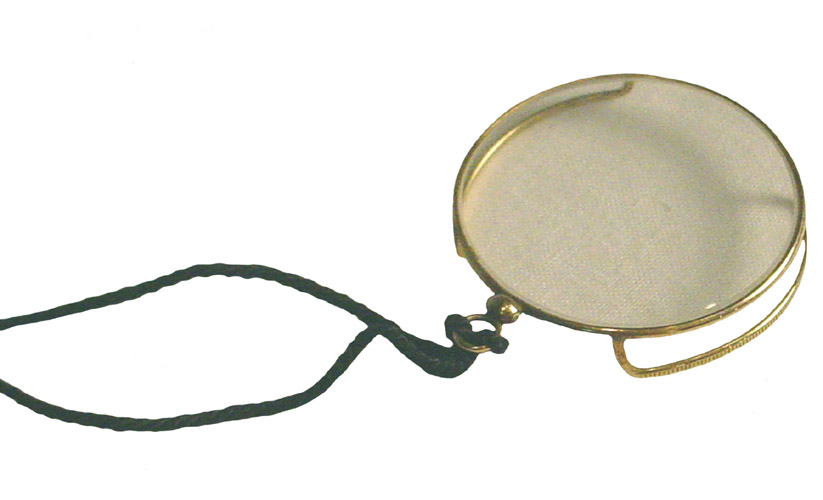
Face fashions of the past show how much ideals change: the kohl-lined eyes of ancient Egypt, the shaved and repainted brows of Heian Japan, the white lead ceruse and silk beauty patches of Renaissance and eighteenth-century Europe, the whiskers of the Victorians, and the monocle and pince-nez. Each was once ordinary, and each says something about its time.
Old ideals
Egyptian men and women lined their eyes with kohl more than 5,000 years ago. Heian court women in Japan removed their brows and painted new ones high on the forehead, and blackened their teeth. In Europe, Elizabeth I is pictured with a face whitened by ceruse, which contained lead. In eighteenth-century France, silk mouches imitated beauty marks.
Whiskers and frames
In the nineteenth century sideburns, mutton chops and full beards became the norm for European and American men, and armies required moustaches. Pince-nez and monocles were the fashionable eyewear. The clean-shaven face spread in the twentieth century with safety razors and the First World War. The toothbrush moustache, popular early in the century, became rare after the Second World War.
Famous history face guides



Still to be written: Venetian ceruse.
Further reading
 WorldUrna
A spiral mark on the forehead in Buddhist art.Adornment
 🇳🇿 New ZealandTā moko
Traditional permanent facial and body markings of the Māori people of New Zealand.Marking
 🇮🇳 IndiaKesh
Uncut hair kept as a religious symbol in Sikhism, part of the Five Ks.Marking · 1699
🇮🇳 IndiaIndigenous Tattoos of the Indian Subcontinent
Traditional body marking for identity and protection in South Asia.Marking
 🇳🇬 Nigeria and 2 moreYoruba tribal marks
Scarification patterns used by the Yoruba people for identity and beauty.Marking
 🇯🇵 JapanHikimayu
A pre-modern Japanese practice of removing natural eyebrows and painting new ones on the forehead.Makeup
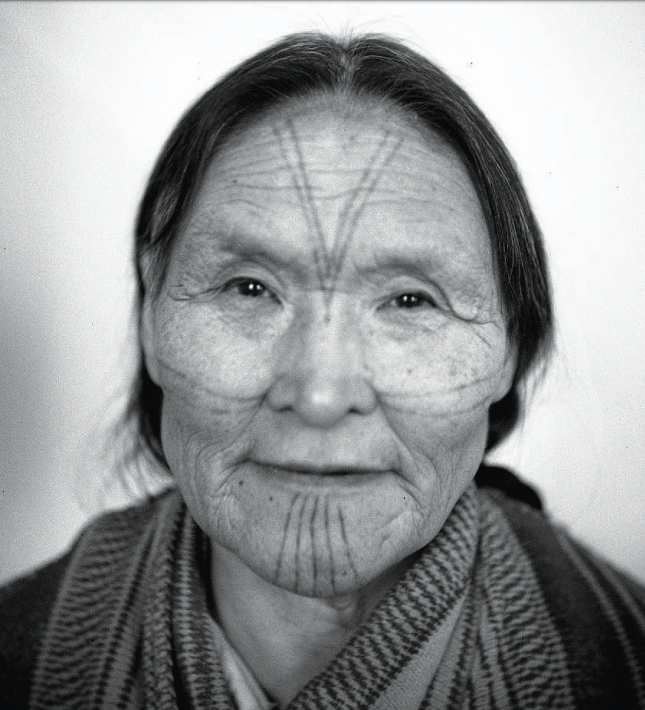 🇨🇦 CanadaKakiniit
Traditional facial and body tattoos of Inuit women in the North American Arctic.Marking
 🇩🇿 Algeria and 4 moreAfrican scarification
Traditional skin marking practices across Africa for identity and status.Marking
🇳🇬 NigeriaIchi
Ritual facial scarification of the Igbo people marking nobility.Marking
 🇨🇳 ChinaJing
A Chinese opera role for mighty men, defined by heavy face painting.Makeup
🇺🇸 United StatesTavlugun
A traditional chin tattoo worn by Indigenous Iñupiaq women.Marking
 🇺🇸 United States and 1 moreYidiiltoo
Traditional face tattoos of Hän Gwich’in women from Alaska and Canada.Marking
WorldMicroblading
A semi-permanent technique for enhancing eyebrow shape and colour using fine hand-drawn strokes.Makeup · 2007
 🇲🇲 MyanmarTattooing in Myanmar
Traditional body art of Myanmar's ethnic groups, marking strength and identity.Marking
 🇯🇵 Japan and 4 moreTeeth blackening
A traditional custom of dyeing teeth black to signify adulthood and beauty.Makeup
 🇹🇷 Turkey and 2 moreDeq
Traditional permanent tattooing among Kurds and YazidisMarking
 🇮🇳 India and 2 moreGodna
Traditional tribal face and body tattooing from IndiaMarking
 WorldScarification
Permanent skin markings created by cutting or burning for cultural identity.Marking
 WorldFace tattoo
Ink designs on the face or head from traditional customsMarking
 🇪🇬 Egypt and 4 moreKohl
A traditional eye cosmetic made from crushed minerals or soot, used across Africa and Asia for thousands of years.Makeup
 🇮🇱 Israel and 1 morePayot
Sidelocks worn by Orthodox Jewish men as a religious observance.Beard
🇲🇲 MyanmarChin facial tattoos
Traditional facial ink patterns worn by Chin women in Myanmar.Marking
🇲🇽 MexicoDía de los Muertos face paint
Skull-style makeup worn during Mexican Day of the Dead celebrations to honour ancestors.Makeup · Most faces · 1913
🇩🇿 Algeria and 3 moreAmazigh facial tattoos
Traditional geometric skin markings of North African Amazigh women.Marking
🇹🇼 TaiwanAtayal facial tattoos
Traditional markings of the Atayal people in Taiwan, signifying skill and spiritual passage.Marking
🇮🇳 IndiaApatani facial tattoos
Facial tattoos and nose plugs of Apatani women in IndiaMarking
🇯🇵 JapanAinu lip tattoos
Traditional facial markings worn by Ainu women to mark maturity and protect the spirit.Marking
Photo credits on this page
The small pictures above come from Wikimedia Commons under free licences. Some are cropped to fit.
- Beauty mark: Ian Smith, CC BY-SA 2.0, source
- Ohaguro: Utagawa Kunisada, Public domain, source
- Hikimayu: Unknown author, Public domain, source
- Tattooing in Myanmar: Unknown author, CC BY 4.0, source
- Face tattoo: Gottfried Lindauer, Public domain, source
- Tā moko: Gottfried Lindauer, Public domain, source
- Kesh: Carl W. Damman, Public domain, source
- Yoruba tribal marks: User:FA2010, Public domain, source
- Kakiniit: Henry Busse, Public domain, source
- African scarification: Kathy Gerber (kathleen.gerber), CC BY-SA 2.0, source
- Jing: G41rn8, CC BY-SA 4.0, source
- Yidiiltoo: Internet Archive Book Images, No restrictions, source
- Teeth blackening: momo, CC BY 2.0, source
- Deq: Dûrzan cîrano, CC BY-SA 3.0, source
- Godna: Shivangi Lokras, CC BY-SA 4.0, source
- Scarification: John Atherton, CC BY-SA 2.0, source
- Pince-nez: Łeba, CC BY 3.0, source
- Monocle: Sobebunny, CC BY-SA 3.0, source
- Kohl: Camila Zanon., CC BY 2.0, source
- Urna: Iudexvivorum, CC0, source
- Toothbrush moustache: Trailer screenshot, Public domain, source
- Payot: Mark Neyman, CC BY-SA 3.0, source