
Tā moko
Traditional permanent facial and body markings of the Māori people of New Zealand.
Tā moko is a sacred tattooing custom practised by the indigenous Māori of New Zealand. It serves as a vital marker of social rank, genealogy, and cultural identity, with distinct styles for men and women that have seen a modern resurgence since the late twentieth century.
- Traditional tools included bone chisels that left grooved textures on the skin.
- Men typically received facial tattoos, while women wore lip and chin markings.
- The practice declined after European contact but revived significantly in the 1990s.
- Kirituhi is a term for Māori-inspired designs applicable to anyone without genealogical ties.
What it is
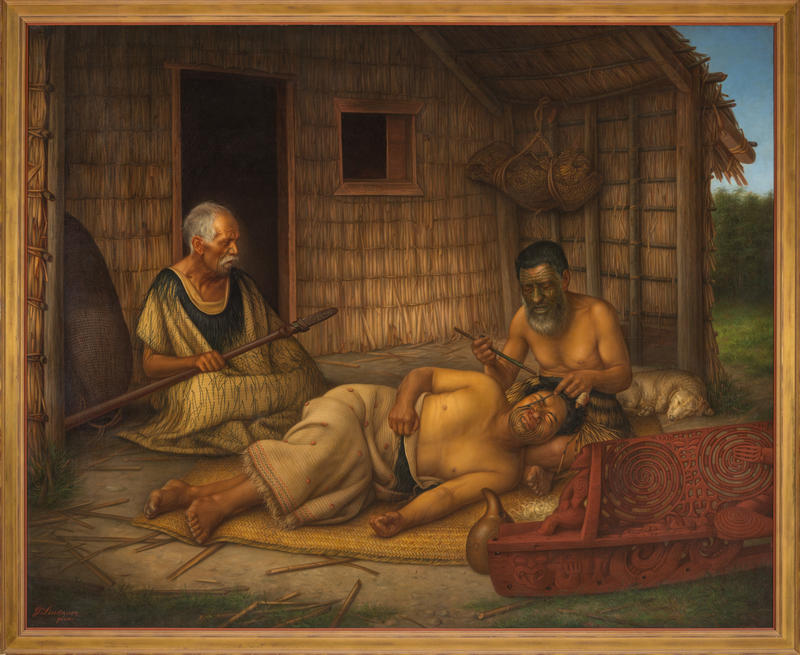
Tā moko refers to the permanent skin markings created by the Māori people of New Zealand. Historically, these designs were carved into the skin using bone chisels called uhi, which left raised grooves rather than a flat surface. Modern techniques often use needles, resulting in smoother textures. The practice covers specific areas depending on gender: men typically receive facial tattoos known as moko kanohi, while women often wear markings on their lips and chins called moko kauae. These intricate patterns serve as visual records of lineage, status, and personal achievements within the community.
History and origin
The tradition originates from Eastern Polynesia and was central to pre-contact Māori society. High-ranking individuals received these marks as symbols of mana and social standing. The arrival of European colonists disrupted the practice; the trade of preserved heads, known as mokomokai, altered its dynamics. By the late nineteenth century, needle tools replaced traditional chisels for safety and speed. Facial tattooing for men largely ceased around the 1860s due to changing fashion and Christian influences, though women continued the practice well into the twentieth century. A significant cultural revival began in the 1990s, restoring tā moko as a key element of Māori identity.
What it means
In traditional contexts, tā moko signifies mana, high social status, and successful initiation into adulthood. It also functions as a mark of attractiveness. The process involves sacred rituals, and the specialists who perform it are considered tapu. Today, the meaning has evolved to represent cultural revitalisation and individual expression. While historically linked to tribal identity, contemporary interpretations allow for personal milestones, such as educational graduations. The term kirituhi denotes designs inspired by Māori aesthetics but intended for non-Māori, distinguishing them from the genealogical significance of traditional moko.
Styling and care
Historically, tohunga-tā-moko used albatross bone chisels struck with a mallet to carve the skin. Pigments were derived from burnt timber and kauri gum soot mixed with fat. Men traditionally removed facial hair to display their moko fully, though some later grew beards to cover them in response to colonial pressure. Women’s lip and chin tattoos remained visible throughout the early twentieth century. Contemporary practitioners utilise both tattoo machines and traditional chisels. The designs are tailored to reflect the wearer’s life journey, with artists adjusting themes to match modern lifestyles while maintaining cultural integrity.
In culture
Notable figures have brought tā moko into public view, including politician Nanaia Mahuta, who faced controversy for wearing her moko kauae as foreign minister. Journalist Oriini Kaipara became the first person with traditional facial markings to host prime-time news in New Zealand. The practice has also sparked debates regarding cultural appropriation when worn by non-Māori celebrities. Literature and media continue to explore its significance, with publications detailing personal journeys and historical analyses of the art form's evolution from ancient rites to modern symbols of pride.


Questions people ask about Tā moko
What is the difference between tā moko and kirituhi?
Tā moko carries deep genealogical and spiritual significance specific to Māori heritage. Kirituhi translates to skin writing and uses Māori design elements but does not require tribal connections, making it suitable for non-Māori individuals seeking culturally respectful artwork.
How were traditional tā moko applied?
Historically, specialists used bone chisels called uhi to carve patterns into the skin. This method created raised grooves. Pigments were made from burnt timber and kauri gum soot mixed with fat, stored in ornate vessels passed down through generations.
Why did men stop receiving facial moko?
Facial tattooing for men declined around the 1860s due to changing fashion trends and acceptance by Pākehā society. Christian missionaries often disapproved of the markings, leading some men to grow facial hair to cover their moko or remove them entirely.
What do tā moko designs represent today?
Modern tā moko reflects cultural identity and personal achievement. Artists adjust themes to match contemporary lifestyles, allowing individuals to mark milestones like education or career success while honouring ancestral traditions and revitalising Māori culture.
Good reading and sources
The facts on this page come from the Wikipedia article "Tā moko", written by its contributors and used under the CC BY-SA 4.0 licence, and from its Wikidata record (CC0). EveryFaceShape rewrote the text in its own words, with AI assistance, and compares every page with the article to make sure no passage is copied. It may be reused under the same CC BY-SA 4.0 licence with a link back.
It may contain mistakes, and figures change over time. Nothing here is investment or buying advice. If something is wrong, tell us. Last refreshed 2026-11-15.
Like Tā moko
All face tattoos and markings 🇳🇬 Nigeria and 2 moreYoruba tribal marks
Scarification patterns used by the Yoruba people for identity and beauty.Marking
 WorldFace tattoo
Ink designs on the face or head from traditional customsMarking
 🇲🇲 MyanmarTattooing in Myanmar
Traditional body art of Myanmar's ethnic groups, marking strength and identity.Marking