Pince-nez
Eyeglasses that clip onto the nose bridge without earpieces, popular in the late nineteenth and early twentieth centurie
Pince-nez are frames that rest on the nasal bridge using tension rather than side arms. They rose to prominence between 1880 and 1900 after appearing in the 1840s, offering a secure fit through various spring mechanisms.
- Frames use tension on the nose bridge instead of earpieces.
- Peak popularity occurred between 1880 and 1900.
- Fits-U model fixed lens spacing for better vision correction.
- Spanish poet Francisco de Quevedo inspired the term quevedos.
- Chains prevented loss when glasses were removed frequently.
What it is
Pince-nez are eyeglasses designed to stay on the face without using earpieces. The name derives from French words meaning pinch and nose. Frames rely on pressure against the nasal bridge to remain in place. Early versions used iron rivets to join bone or antler pieces. Later models employed flexible metal bridges or springs. Some styles included nose pads made of cork. A chain or ribbon often connected the glasses to clothing to prevent loss. This design allowed wearers to remove them easily when not needed.
History and origin
The earliest archaeological evidence dates to the mid-fifteenth century using bull bone and antler. Modern iterations emerged in the 1840s and peaked between 1880 and 1900. Varieties like the C-bridge dominated from the 1820s to the 1940s. The Fits-U model, patented by Jules Cottet in 1893, offered fixed lens spacing. American Optical later commercialized this design successfully. Oxford spectacles also gained popularity in Europe and America until the 1930s.
What it means
These glasses carried social implications due to the stigma of wearing corrective lenses. Chains helped manage the inconvenience of frequent removal. In literature, they signified intellectual status or aristocratic background. Francisco de Quevedo wore them so distinctly that they became known as quevedos in Spanish. Artists depicted them to convey character traits or historical context.
The science
C-bridge models suffered from metal fatigue due to repeated flexing. Lens rotation during placement prevented correction for astigmatism in some varieties. The Fits-U design solved rotation issues with rigid bridges and springs. Fixed lens separation allowed proper interpupillary distance matching. Cork nose pads provided traditional comfort but required attachment to frames.
Styling and care
Wearers attached suspension chains or cords to keep glasses secure. Levers above the bridge opened planquettes for fitting. Springs clipped onto the nose bridge for tension. Nose pads were either hinged or stationary. Users squeezed levers to open frames and released them to close. Proper fit required matching lens separation to facial width.
In culture
Pince-nez appear in Sherlock Holmes mysteries and Agatha Christie novels. Fictional figures like Hercule Poirot and Morpheus wear them. Erik Satie composed music depicting their cleaning. Gomez Addams kept a pair in his jacket pocket. Portraits of Francisco de Quevedo highlight their cultural significance. These items feature prominently in stage and screen depictions of historical periods.


Questions people ask about Pince-nez
How do pince-nez stay on the face?
They rely on tension applied directly to the nasal bridge. Flexible metal springs or rigid bridges press against the nose. This eliminates the need for side arms that rest on ears. Wearers often used chains to prevent accidental drops.
What makes the Fits-U model different?
The Fits-U features a rigid bridge with springs in the nose rests. Lenses do not rotate during placement, allowing astigmatism correction. The fixed distance between lenses matches specific interpupillary spacing requirements.
Why were chains commonly used with these glasses?
Glasses did not always stay securely on the nose. Wearing spectacles carried social stigma at times. Chains allowed easy removal while preventing loss. They connected the frames to clothing or ears for convenience.
Can pince-nez correct astigmatism?
Some varieties like the astig and Fits-U can. Their lenses do not rotate when placed on the nose. Other types like the C-bridge allow rotation, making them unsuitable for astigmatism correction.
Good reading and sources
The facts on this page come from the Wikipedia article "Pince-nez", written by its contributors and used under the CC BY-SA 4.0 licence, and from its Wikidata record (CC0). EveryFaceShape rewrote the text in its own words, with AI assistance, and compares every page with the article to make sure no passage is copied. It may be reused under the same CC BY-SA 4.0 licence with a link back.
It may contain mistakes, and figures change over time. Nothing here is investment or buying advice. If something is wrong, tell us. Last refreshed 2026-11-15.
Like Pince-nez
All eyewear frames WorldHorn-rimmed glasses
Thick-framed eyewear imitating horn or tortoiseshell.Frame · Most faces · 1917
 WorldGlasses
Vision eyewear with lenses in a frame for correction, protection, or fashion.Frame · Most faces
 🇬🇧 United KingdomWindsor glasses
Round metal frames with a saddle bridge.Frame · Most faces · 1840
 🇩🇪 GermanyMonocle
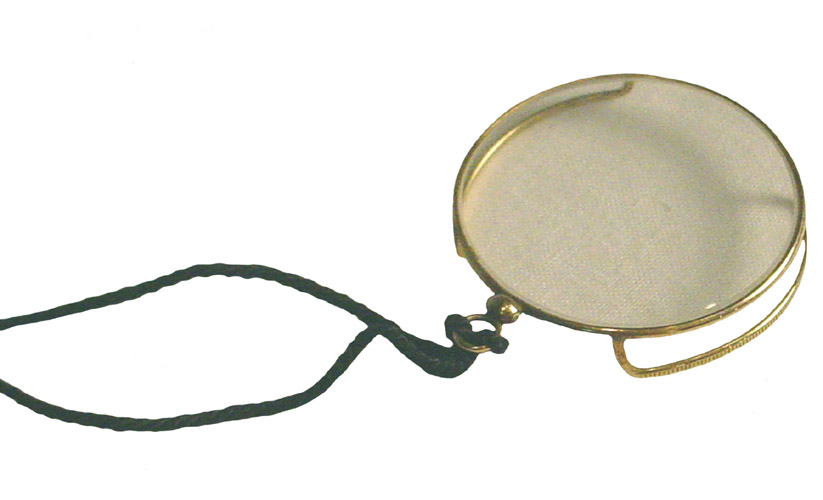
A single corrective lens held in the eye socket by one eye.Frame · Most faces · 1830