
Cat eye glasses
Eyewear with an upsweep at the outer corners of the frame.
Cat eye glasses are a style of eyewear defined by an upward sweep at the outer edges. First popular in the 1950s and 1960s, they have seen revivals in later decades and remain a distinct fashion choice today.
- Defined by an upsweep at the outer frame edges.
- Popularised in the 1950s and 1960s among women.
- Originally designed as the Harlequin frame by Altina Schinasi.
- Revived in the 1990s and late 2010s by influencers.
- Used in Meta and Ray-Ban Skyler smartglasses in 2024.
What it is
Cat eye glasses are a specific shape of eyewear characterised by an upsweep at the outer edges. This lift occurs where the temples or arms connect to the front of the frame. The style is closely related to browline glasses but is distinct due to this upward angle. It creates a lifted appearance around the eyes. The frames can vary in thickness and material, but the defining structural feature remains the angled upper rim at the sides.
History and origin
An early precursor appeared in 1931 with American Optical’s Ful-Vue product, which placed hinges higher on the frame. Window-dresser Altina Schinasi later designed the Harlequin frame, named after a commedia dell’arte character. She collaborated with boutique Lugene to produce them. Fashion designer Claire McCardell and American Optical released a version in 1952. The style peaked in popularity during the 1950s and 1960s. It declined afterwards but saw revivals in the 1990s and late 2010s. By the mid-2020s, the design was used in smartglasses.
What it means
The style is strongly associated with the fashion of the 1950s and 1960s. It often appears alongside period-specific looks such as the beehive hairstyle. Originally named the Harlequin frame, it draws inspiration from theatrical masks. The design gained status through adoption by socialites and writers like Clare Boothe Luce. In recent years, it has been linked to modern influencers and high-fashion models, marking it as a recurring trend rather than a static historical artifact.
Styling and care
These glasses are worn as corrective or protective eyewear. They were historically paired with voluminous hairstyles like the beehive. Modern wearers may choose them for a vintage aesthetic. The frames are available in various colours and materials. They precede the larger bug-eye styles that became common in subsequent decades. Designers continue to adapt the upswept shape for contemporary collections, including integrated technology frames.
In culture
Celebrities such as Marilyn Monroe, Audrey Hepburn, and Catherine Deneuve helped popularise the look. Other notable wearers include Shirley Chisholm, Elizabeth Taylor, and Barry Humphries as Dame Edna Everage. The style has been adopted by musicians and journalists like Lisa Loeb and Jane Jacobs. In the 2020s, models such as Bella Hadid and Kendall Jenner contributed to its renewed visibility. The design now appears in tech-focused eyewear collaborations.
Questions people ask about Cat eye glasses
What defines the cat eye glasses shape?
The defining feature is an upsweep at the outer edges where the temples join the frame front. This distinguishes them from other styles like browline glasses, although they are related in form.
Who originally designed this style of eyewear?
Window-dresser Altina Schinasi designed the Harlequin frame, a precursor to the modern cat eye. She collaborated with boutique Lugene to manufacture them, raising the profile of the style.
When were cat eye glasses most popular?
They were widely worn in the 1950s and 1960s. The style fell out of favour afterwards but experienced revivals in the 1990s and again in the late 2010s.
Are cat eye glasses still worn today?
Yes, the style remained visible in the mainstream and fashion industry by the mid-2020s. It has also been incorporated into modern smartglasses designs, such as the Skyler frame.
Good reading and sources
- Cat eye glasses on WikipediaEncyclopedia
- More photos on Wikimedia CommonsPhotos
- Wikidata recordOpen data
The facts on this page come from the Wikipedia article "Cat eye glasses", written by its contributors and used under the CC BY-SA 4.0 licence, and from its Wikidata record (CC0). EveryFaceShape rewrote the text in its own words, with AI assistance, and compares every page with the article to make sure no passage is copied. It may be reused under the same CC BY-SA 4.0 licence with a link back.
It may contain mistakes, and figures change over time. Nothing here is investment or buying advice. If something is wrong, tell us. Last refreshed 2026-11-15.
Like Cat eye glasses
All eyewear frames 🇩🇪 Germany and 2 morePanto glasses
Rounded-oval frames with a flat top edge.Frame · Most faces · 1932
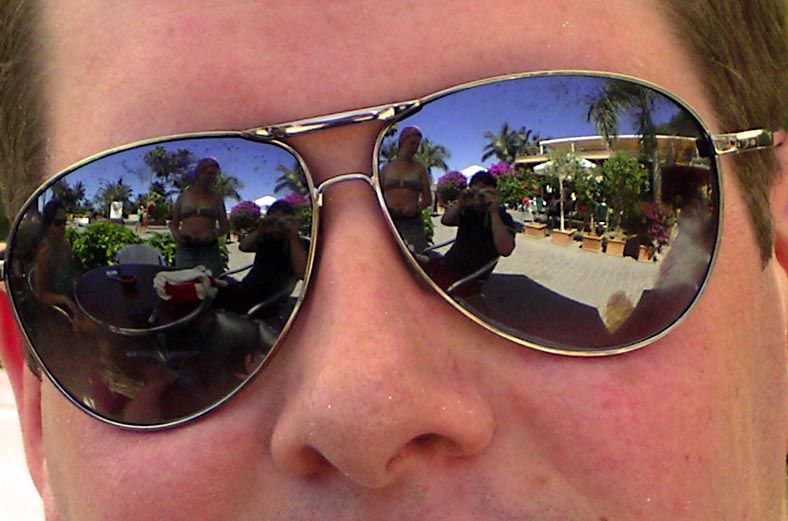 🇺🇸 United StatesAviator sunglasses
Teardrop-lensed eyewear designed for pilots and adapted for fashion.Frame · Most faces · 1937
 WorldHorn-rimmed glasses
Thick-framed eyewear imitating horn or tortoiseshell.Frame · Most faces · 1917
 🇺🇸 United StatesBrowline glasses
Eyeglass frames with a bold upper rim resembling eyebrows.Frame · Most faces · 1947
More from Altina Schinasi
All of them WorldBug-eye glasses
Large-lensed eyewear from the late twentieth centuryFrame · Most faces · 1975
 🇫🇷 France and 1 morePince-nez
Eyeglasses that clip onto the nose bridge without earpieces, popular in the late nineteenth and early twentieth centurieFrame · Most faces · 1840
 WorldContouring
A makeup method using darker and lighter shades to sculpt facial features.Makeup
 WorldMonroe piercing
Off-centre lip stud mimicking a beauty spotAdornment · Most faces