
Browline glasses
Eyeglass frames with a bold upper rim resembling eyebrows.
Browline glasses feature a thick upper frame that mimics the brow line, paired with a thinner metal lower rim. Introduced in 1947 by Shuron Ltd, they dominated mid-century fashion and returned to popularity in the 2010s through retro trends.
- Introduced by Shuron Ltd in 1947 as the Ronsir model.
- Accounted for fifty percent of glasses sold in the 1950s.
- Ray-Ban Clubmaster became a top-selling sunglass in the 1980s.
- Revived in the 2010s by retro fashion and TV shows.
- Features a thick upper rim and thin metal lower chassis.
What it is
Browline glasses are defined by a distinct construction where the upper part of the frame is bold and thick, resembling eyebrows. This upper section, often called the cap or brow, is typically made of plastic or metal. The lower part of the frame, known as the chassis, consists of thin metal eyewires and a bridge. Screws usually attach the metal chassis to the heavier upper caps. This design draws attention to the wearer’s natural brow line and eyes. Some variants use aluminium for the caps, while others maintain the classic plastic look. The style creates a semi-rimless appearance at the bottom, contrasting with the solid top.
History and origin
Jack Rohrbach introduced the style in 1947 for Shuron Ltd under the name Ronsir. It allowed users to swap bridges and caps for custom fits. The design drew inspiration from the earlier British Supra frame. By the 1950s, it accounted for half of all glasses sold in the US. Manufacturers like Art-Craft Optical and Victory Optical joined the market. Popularity waned in the 1970s due to cultural shifts but surged again in the 1980s as sunglasses. The Ray-Ban Clubmaster became a bestseller. After a decline in the 1990s, the style returned in the 2010s, influenced by television shows and retro fashion trends.
What it means
In the mid-twentieth century, these frames signified professional conformity and mainstream taste. They were worn by political leaders and business figures. During the 1990s, the style carried stigmas associated with nerdiness or conservative politics. Films and media sometimes linked them to specific character archetypes. The recent revival recontextualized them as fashionable retro accessories. Today, they represent a blend of vintage aesthetics and modern hipster subculture. The frames no longer carry the same conformist weight, instead serving as a stylistic choice for those interested in mid-century design.
Styling and care
Wearers can choose between plastic or metal caps to match their preference. Early models offered interchangeable parts for color and size coordination. Modern versions may feature wood-grain patterns or solid colours. The frames suit many face shapes, with manufacturers offering rectangular variations. They pair well with both casual and formal attire. Sunglass versions with tinted lenses remain popular for outdoor wear. Maintenance involves checking the screws that join the metal chassis to the upper brows.
In culture
Notable figures such as Malcolm X and President Lyndon B. Johnson wore this style. It appeared in films like The Wall and Falling Down. Television series including Mad Men and Heroes featured characters in browlines. Bruce Willis helped revive demand in the 1980s via Moonlighting. The frames are now staples in retro-inspired collections. They appear frequently in media set in the 1950s and 1960s. The style has transcended its original era to become a recurring fashion element.


Questions people ask about Browline glasses
What defines a browline glass frame?
The frame has a thick upper portion that mimics eyebrows, usually made of plastic or metal. The lower part is a thin metal wire holding the lens. This contrast creates a distinctive semi-rimless look that highlights the eyes.
Who popularized browline glasses originally?
Shuron Ltd introduced them in 1947. They became widespread in the 1950s, worn by figures like Malcolm X and Lyndon B. Johnson. Six major manufacturers dominated the market during this peak period.
Why did browline glasses return to fashion?
Television shows like Mad Men sparked interest in 1960s styles. The hipster subculture embraced retro aesthetics in the 2010s. Manufacturers reintroduced classic designs to meet this renewed demand for vintage-inspired eyewear.
Are browline glasses suitable for all face shapes?
Manufacturers modified the original design to appeal to various face shapes. Rectangular models like the Rondon were created for this purpose. The bold upper rim can help balance features on many different face types.
Good reading and sources
- Browline glasses on WikipediaEncyclopedia
- More photos on Wikimedia CommonsPhotos
- Wikidata recordOpen data
The facts on this page come from the Wikipedia article "Browline glasses", written by its contributors and used under the CC BY-SA 4.0 licence, and from its Wikidata record (CC0). EveryFaceShape rewrote the text in its own words, with AI assistance, and compares every page with the article to make sure no passage is copied. It may be reused under the same CC BY-SA 4.0 licence with a link back.
It may contain mistakes, and figures change over time. Nothing here is investment or buying advice. If something is wrong, tell us. Last refreshed 2026-11-15.
Like Browline glasses
All eyewear frames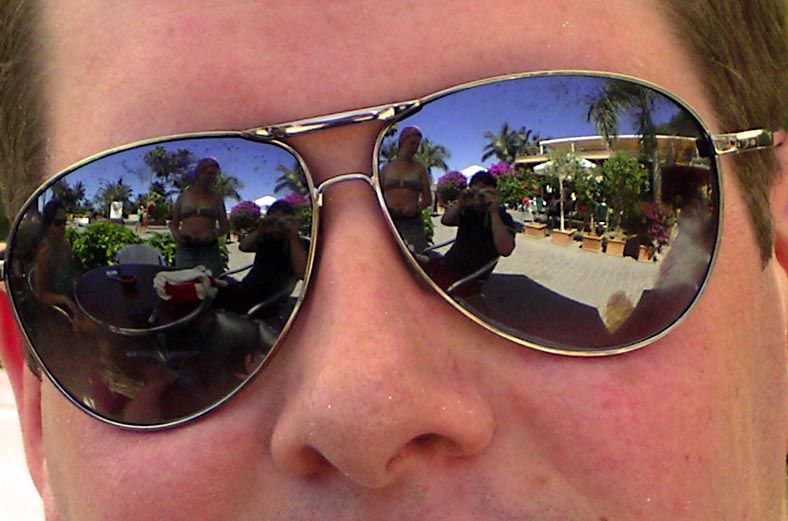 🇺🇸 United StatesAviator sunglasses
Teardrop-lensed eyewear designed for pilots and adapted for fashion.Frame · Most faces · 1937
 🇩🇪 Germany and 2 morePanto glasses
Rounded-oval frames with a flat top edge.Frame · Most faces · 1932
 WorldCat eye glasses
Eyewear with an upsweep at the outer corners of the frame.Frame · Most faces · 1931
 WorldBug-eye glasses
Large-lensed eyewear from the late twentieth centuryFrame · Most faces · 1975
More from Shuron Ltd
All of them 🇺🇸 United States and 1 moreWayfarer
A trapezoidal eyewear frame designed in 1952 and revived multiple times through film placements.Frame · Oval faces · 1952
 WorldHorn-rimmed glasses
Thick-framed eyewear imitating horn or tortoiseshell.Frame · Most faces · 1917
 🇺🇸 United StatesMirrored sunglasses
Sunglasses with a reflective outer coating that reduces glare and light transmission.Frame · Most faces