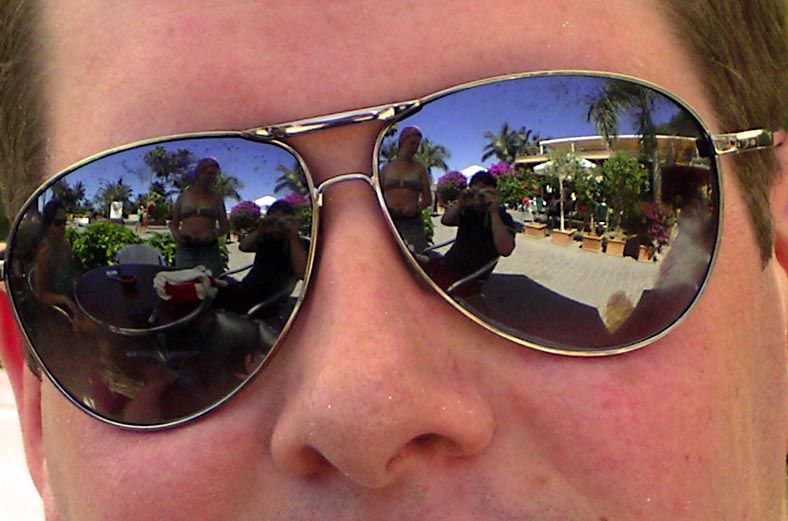
Aviator sunglasses
Teardrop-lensed eyewear designed for pilots and adapted for fashion.
Developed in the 1930s by American firms like Bausch & Lomb for military pilots, aviator sunglasses feature large convex lenses and thin metal frames. Originally created to reduce glare at high altitudes, they became a widespread civilian fashion staple after World War II.
- First developed in 1936 to reduce pilot glare at high altitudes.
- General MacArthur’s 1944 photos popularised the style globally.
- Lenses cover the full field of vision with convex shaping.
- Military specs require 12-18% visible light transmission.
- Ray-Ban Shooter variant originally included a cigarette holder.
What it is
Aviator sunglasses are defined by their large, slightly convex lenses that cover the full field of vision. The frames are typically thin, made from metals like monel, steel, or titanium, and often feature double or triple bridges. Earpieces may be bayonet-style or flexible cables that hook securely behind the ears. This design aims to block visible light, infrared radiation, and ultraviolet rays from all angles while remaining lightweight enough for use under headgear.
History and origin
The style originated in the 1930s through collaboration between the US Army Air Corps and manufacturers like Bausch & Lomb. Colonel John Macready sought to reduce sky glare for pilots, leading to the 1936 Anti-Glare prototype. Military models like the D-1 and AN6531 followed, with the latter becoming standard in 1941. After World War II, surplus stocks entered the civilian market. Bausch & Lomb launched the commercial Ray-Ban Aviator in 1937, cementing the style’s place in fashion history.
What it means
Initially purely functional military gear, aviators gained cultural weight during World War II. Images of General Douglas MacArthur wearing them created a lasting association with leadership and heroism. Post-war, they symbolised a modern, technical demeanor. By the 1950s and later decades, they became a fashion statement, adopted by musicians and actors, shifting from utility items to symbols of coolness and recreational style.
The science
The lenses are designed to filter specific wavelengths. Early green lenses transmitted 50% of visible light, while later G-15 lenses transmit 15%, offering true colour perception. Polarized variants reduce glare from non-metallic surfaces like water by blocking polarized diffuse sky radiation. The convex shape ensures coverage of the eye’s peripheral vision, protecting against erythemal ultraviolet radiation entering from side angles.
Styling and care
Stylists note that the teardrop shape balances facial features, suiting many face types. Traditional models use skull temples, while military versions use bayonet or cable temples for helmet compatibility. Variants like the Ray-Ban Shooter include a brow bar to keep sweat out of the eyes. Modern wearers choose between classic metal frames and updated materials, often pairing them with casual or retro-inspired outfits.


Questions people ask about Aviator sunglasses
Why are aviator lenses shaped like teardrops?
The teardrop shape was designed to accommodate pilots looking down at instrument panels. It covers the entire field of vision, including the lower peripheral area, ensuring protection from glare from all angles while in flight.
Are polarized lenses suitable for pilots?
No. The United States Federal Aviation Administration advises against polarized lenses for pilots. They can interfere with reading instruments and detecting other aircraft. Photochromic lenses are also not recommended for aviation use.
What is the difference between AN6531 and HGU-4/P models?
The AN6531 was a World War II standard with flexible cable temples. The HGU-4/P, introduced in the late 1950s, features semi-rectangular lenses, is lighter, and uses bayonet temples to fit better under flight helmets and oxygen masks.
Good reading and sources
- Official websiteOfficial site
- Who Made Those Aviator Sunglasses? (Published 2012)The New York Times, Article
- The enduring appeal of aviator sunglassesBBC, Article
The facts on this page come from the Wikipedia article "Aviator sunglasses", written by its contributors and used under the CC BY-SA 4.0 licence, and from its Wikidata record (CC0). EveryFaceShape rewrote the text in its own words, with AI assistance, and compares every page with the article to make sure no passage is copied. It may be reused under the same CC BY-SA 4.0 licence with a link back.
It may contain mistakes, and figures change over time. Nothing here is investment or buying advice. If something is wrong, tell us. Last refreshed 2026-11-15.
Like Aviator sunglasses
All eyewear frames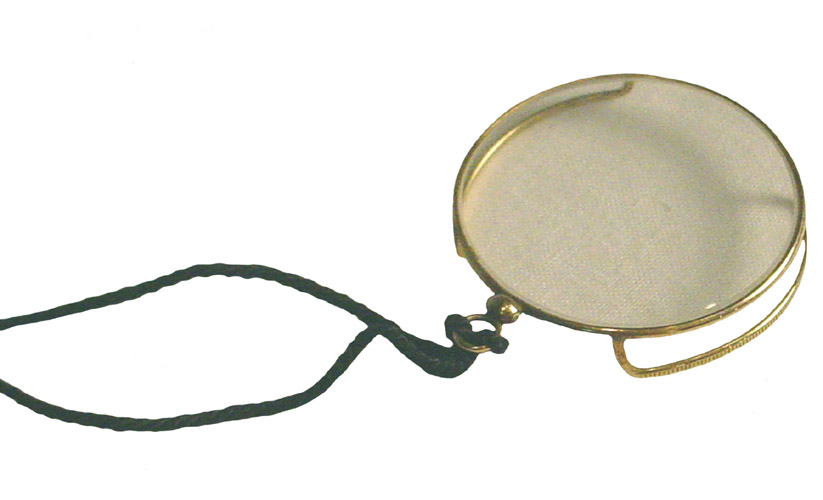 🇩🇪 GermanyMonocle
A single corrective lens held in the eye socket by one eye.Frame · Most faces · 1830
 🇩🇪 Germany and 2 morePanto glasses
Rounded-oval frames with a flat top edge.Frame · Most faces · 1932
 WorldCat eye glasses
Eyewear with an upsweep at the outer corners of the frame.Frame · Most faces · 1931
 🇺🇸 United StatesBrowline glasses
Eyeglass frames with a bold upper rim resembling eyebrows.Frame · Most faces · 1947
More from Bausch & Lomb
All of them 🇺🇸 United States and 1 moreWayfarer
A trapezoidal eyewear frame designed in 1952 and revived multiple times through film placements.Frame · Oval faces · 1952
 🇫🇷 France and 1 morePince-nez
Eyeglasses that clip onto the nose bridge without earpieces, popular in the late nineteenth and early twentieth centurieFrame · Most faces · 1840
 🇺🇸 United StatesGI glasses
Government-issued eyewear for US military recruits, known by dysphemisms like BCGs.Frame · Most faces