Eyewear district, United States
Rochester
The New York city where Bausch and Lomb developed the aviator and the Wayfarer under the Ray-Ban name.
Rochester, in western New York State, was for a century a capital of American optics. Bausch and Lomb, founded there in 1853 by two German immigrants, made spectacles, lenses and instruments. In 1937 it sold its pilots' sunglasses to the public as Ray-Ban, and in 1952 it launched the Wayfarer: two of the most copied frames in the world.
Glasses for pilots
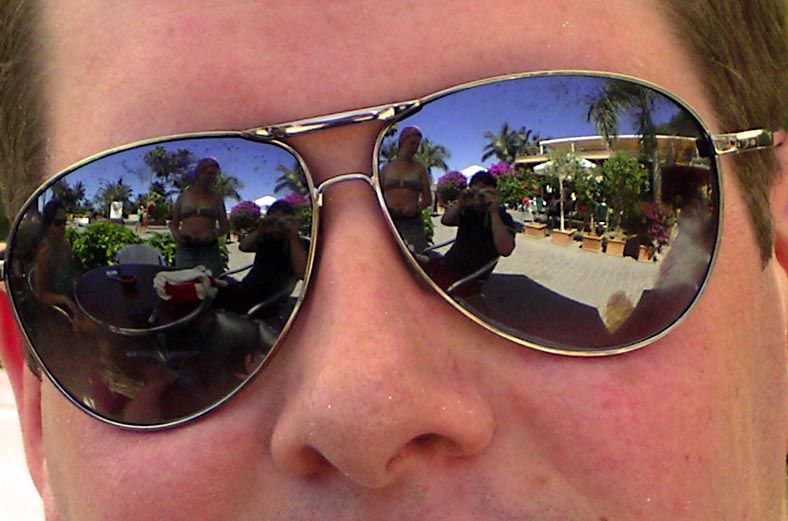
Bausch and Lomb worked with the United States Army Air Corps on glasses that cut glare at altitude. The result, with large teardrop lenses to cover the eye's field of view, became the Ray-Ban aviator, sold to the public from 1937. The lenses were green, chosen to cut glare while keeping colours natural. Pilots, soldiers and then film stars wore them, and they became a lasting fashion.
The Wayfarer and after
In 1952 the company launched the Wayfarer, a moulded plastic frame designed by Raymond Stegeman, wider at the top with a forward tilt. It was worn by musicians and actors from the 1950s and had a second wave in the 1980s. Bausch and Lomb sold Ray-Ban to the Italian maker Luxottica in 1999. Rochester also became a centre of imaging, as the home of Kodak.