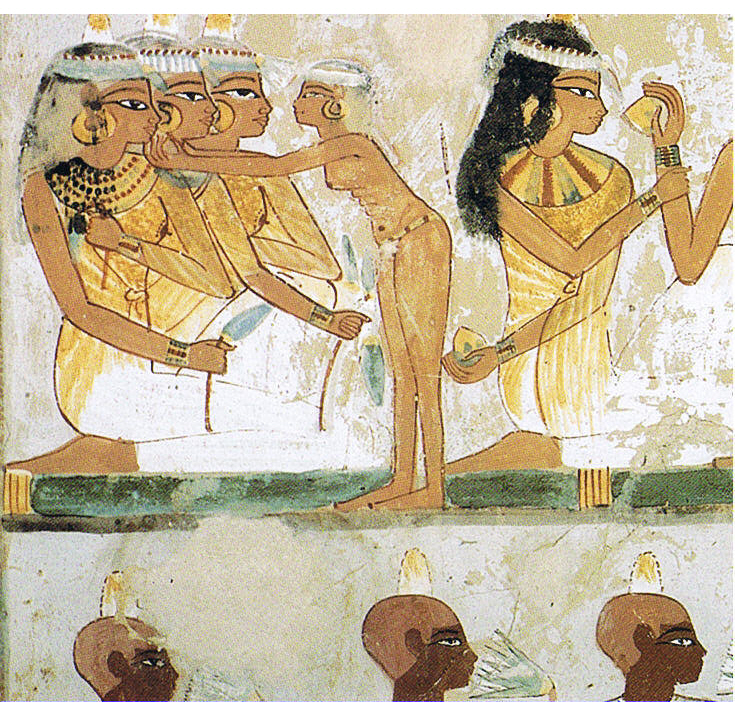
Living tradition, Egypt
Cairo and ancient Egypt
Where the long story of kohl begins: museums in Cairo and Giza hold ancient Egyptian kohl pots and painted eyes.
Ancient Egyptians lined their eyes with kohl and green malachite more than 5,000 years ago, and both men and women wore it. Cairo's Egyptian Museum and the Grand Egyptian Museum at Giza hold kohl jars, applicator sticks and cosmetic palettes from tombs, and painted coffins and statues show the long, winged lines around the eyes. Kohl is still worn in Egypt today.
Eyes of the pharaohs
Egyptian eye paint used galena, a dark lead ore, and malachite, a green copper ore, ground on stone palettes and mixed with fat. It was kept in small jars and applied with sticks. Painted lines extended beyond the outer corner of the eye in a wing. Researchers suggest it also cut glare from the desert sun and may have been thought to protect the eyes, by tradition. The Eye of Horus symbol shows the same lines.
Kohl through the centuries
From Egypt, kohl spread across North Africa, the Middle East and South Asia, where it is called kuhl in Arabic and surma in Urdu and Hindi. It remains part of everyday and festive makeup. Some traditional kohl still contains lead, and health agencies in several countries have warned against it; most commercial eyeliners use other pigments. Kohl-lined eyes are a staple of Egyptian film and fashion.