Theatre and dance makeup, China
Beijing
The home of Peking opera, whose painted faces use colour to show loyalty, cunning, courage and the divine.
Peking opera, jingju, took shape in Beijing after four opera troupes from Anhui arrived in 1790 for the Qianlong Emperor's birthday celebrations and mixed their styles with others. It became China's best-known theatre form, famous for its painted faces, called lianpu. UNESCO listed it as intangible cultural heritage in 2010.
Reading a painted face
The jing, painted-face roles, wear full designs whose colours carry meaning. Red marks loyalty and courage, as for the general Guan Yu; black marks integrity and a fierce temper, as for Judge Bao; white marks cunning, as for Cao Cao; blue marks bravery and wildness; gold and silver are for gods and spirits. There are hundreds of set designs, and the chou, clown roles, wear a white patch around the nose.
Where to see it
Beijing has several old theatres, including the Huguang Guild Hall, built in 1807, and the Zhengyici theatre, a wooden stage in a former temple. The Mei Lanfang Memorial in a courtyard house remembers the most famous performer of the twentieth century, who played women's roles. Many theatres let audiences watch performers make up before the show.
Guides of Beijing
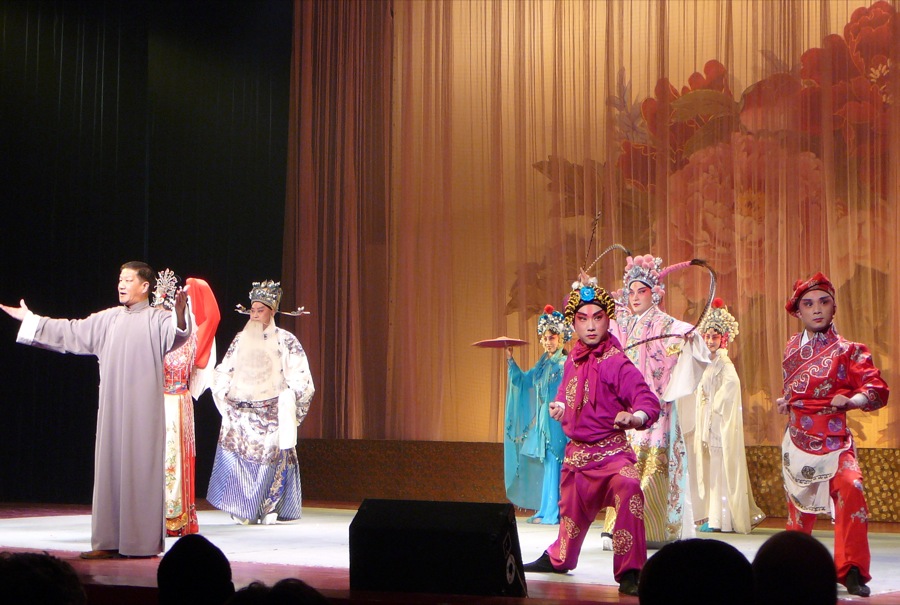

Photo credits on this page
The small pictures above come from Wikimedia Commons under free licences. Some are cropped to fit.
- Theatrical makeup: Mrgarden 2342, CC BY-SA 4.0, source
- Peking opera makeup: Art Poskanzer, CC BY 2.0, source