Eyewear district, Germany
Rathenow
The town on the Havel known as the cradle of German optics, where spectacles have been made since 1801.
Rathenow, west of Berlin on the river Havel, calls itself the cradle of German optics. In 1801 the pastor Johann Heinrich August Duncker received a royal privilege for an optical works there, along with a patent for a machine that ground many lenses at once. Rathenow grew into a centre of spectacle and lens making in the nineteenth and twentieth centuries.
Duncker and Busch
Duncker's multi-grinding machine let a worker grind about eleven lenses at a time, cutting the cost of spectacles. His son Eduard took over in 1819, and in 1845 the business passed to Emil Busch, whose firm became Emil Busch AG in 1872 and made lenses, spectacles and optical instruments. Dozens of other optical workshops followed, and at its peak the town supplied glasses across Germany and abroad.
After reunification
In the German Democratic Republic, Rathenow's firms were merged into a state optical works. After 1990 much of that industry closed, but spectacle making continued, including a large plant of a German eyewear retailer. The Optik Industrie Museum tells the town's story, and the town hosts an optics park with gardens and exhibitions. Rathenow is one of Europe's oldest continuous eyewear towns.
Guides of Rathenow


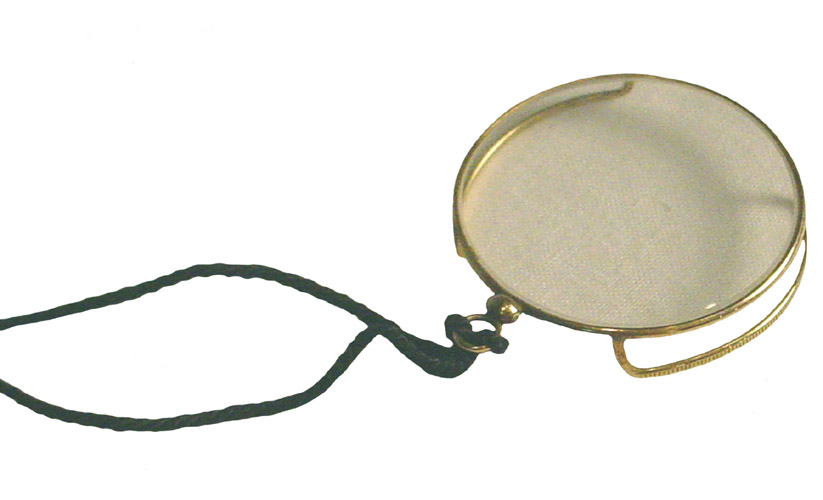
Photo credits on this page
The small pictures above come from Wikimedia Commons under free licences. Some are cropped to fit.
- Pince-nez: Łeba, CC BY 3.0, source
- Monocle: Sobebunny, CC BY-SA 3.0, source
- Glasses: Jacek Halicki, CC BY-SA 4.0, source