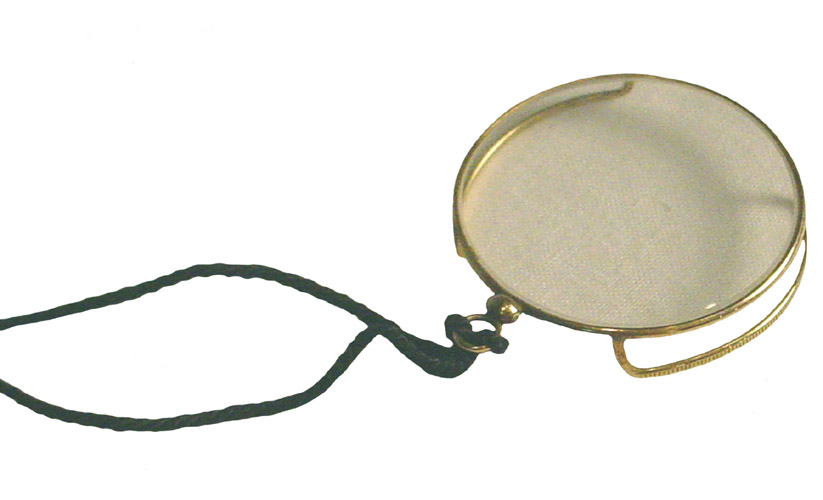
Monocle
A single corrective lens held in the eye socket by one eye.
The monocle is a corrective lens for one eye, worn from the late nineteenth century. It was popular among wealthy men and military officers before modern glasses made it obsolete.
- It corrects vision in only one eye.
- Popular among German military officers in the world wars.
- Custom frames were expensive and fitted to the socket.
- Declined due to advances in optometry technology.
- Associated with wealthy upper-class men in the 1890s.
What it is
A monocle consists of a single circular lens positioned directly in front of one eye. It stays in place using the natural shape of the eye socket. Many designs include a thin wire or string attached to the frame. This cord connects to the wearer's clothing to stop the lens from dropping. Some versions feature a serrated edge or a gallery ridge to improve grip. The device corrects vision in only one eye. It does not cover both eyes like standard spectacles.
History and origin
Philipp von Stosch used an early version as a magnifying tool in the 1720s. The style became common fashion in England from the 1830s. Elaborate frames with galleries appeared in the 1890s. These were expensive and custom-made for wealthy users. Frameless options emerged later for cheaper fitting. Usage declined as eyeglass manufacturing improved significantly.
What it means
The item signified wealth and upper-class status in the late nineteenth century. It completed the outfit of capitalists and dandies. German military officers adopted it widely during the world wars. European armies sometimes restricted its use to those with real vision needs. It also appeared in stylish lesbian circles in the early twentieth century.
Styling and care
Wearers must adjust the fit periodically to keep it secure. Custom fabrication ensures comfort but costs more. Ill-fitting lenses are less comfortable and prone to falling. A comedic trope involves the lens dropping into a drink. The accessory pairs with formal wear like morning coats and top hats.
In culture
Fictional characters like Colonel Klink and the Penguin wear them. The New Yorker mascot Eustace Tilley uses one. Real figures include Karl Marx and Sir Patrick Moore. Otto Dix painted Sylvia von Harden wearing one. It remains a symbol of vintage authority or eccentricity.

Questions people ask about Monocle
How does a monocle stay in place?
It rests in the eye socket and relies on facial tension. A wire or string often connects the frame to the clothing to prevent loss.
Who wore monocles historically?
They were common among wealthy men and German military officers. They also appeared in stylish lesbian circles in the early twentieth century.
Why did monocles fall out of fashion?
Advances in optometry allowed for better prescription glasses. Modern lenses provide easier correction for both eyes without special fitting.
Good reading and sources
The facts on this page come from the Wikipedia article "Monocle", written by its contributors and used under the CC BY-SA 4.0 licence, and from its Wikidata record (CC0). EveryFaceShape rewrote the text in its own words, with AI assistance, and compares every page with the article to make sure no passage is copied. It may be reused under the same CC BY-SA 4.0 licence with a link back.
It may contain mistakes, and figures change over time. Nothing here is investment or buying advice. If something is wrong, tell us. Last refreshed 2026-11-15.
Like Monocle
All eyewear frames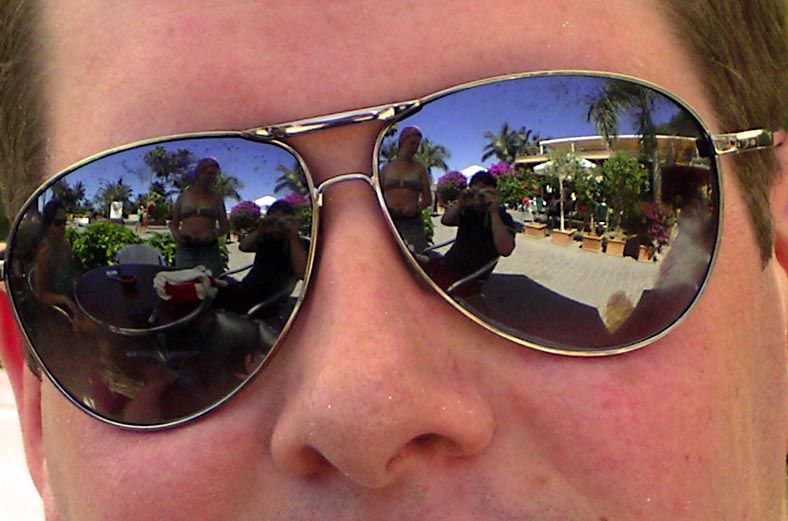 🇺🇸 United StatesAviator sunglasses
Teardrop-lensed eyewear designed for pilots and adapted for fashion.Frame · Most faces · 1937
 🇬🇧 United KingdomWindsor glasses
Round metal frames with a saddle bridge.Frame · Most faces · 1840
 WorldHorn-rimmed glasses
Thick-framed eyewear imitating horn or tortoiseshell.Frame · Most faces · 1917
 WorldCat eye glasses
Eyewear with an upsweep at the outer corners of the frame.Frame · Most faces · 1931