Living tradition, Canada
Iqaluit, Nunavut
Capital of Nunavut and a centre of the revival of kakiniit, the traditional facial tattoos of Inuit women.
Iqaluit, on Baffin Island, is the capital of Nunavut, the Canadian territory created in 1999 as an Inuit homeland. It is one of the centres of the revival of kakiniit, Inuit tattoos, which missionaries had discouraged in the nineteenth and twentieth centuries. Since the 2000s many Inuit women have taken lines on the chin, forehead and cheeks, often in community tattoo gatherings.
Kakiniit
Inuit women were traditionally tattooed by older women, using a needle and thread blackened with soot or lamp oil, pulled under the skin, or by poking. Facial lines marked coming of age and could show family and region, and tattoos on the hands and arms marked skills. By the mid-twentieth century the practice had almost stopped. Revival projects have trained Inuit tattoo artists and recorded designs from elders and old photographs.
Snow goggles and other Inuit inventions
Inuit snow goggles, carved from bone, antler, ivory or driftwood with narrow slits, protected eyes from the glare of snow and ice that causes snow blindness. They are among the oldest kinds of eyewear, made and worn across the Arctic for many centuries. Inuit men in parts of the Arctic also once wore labrets of stone or ivory at the corners of the mouth.
Guides of Iqaluit, Nunavut
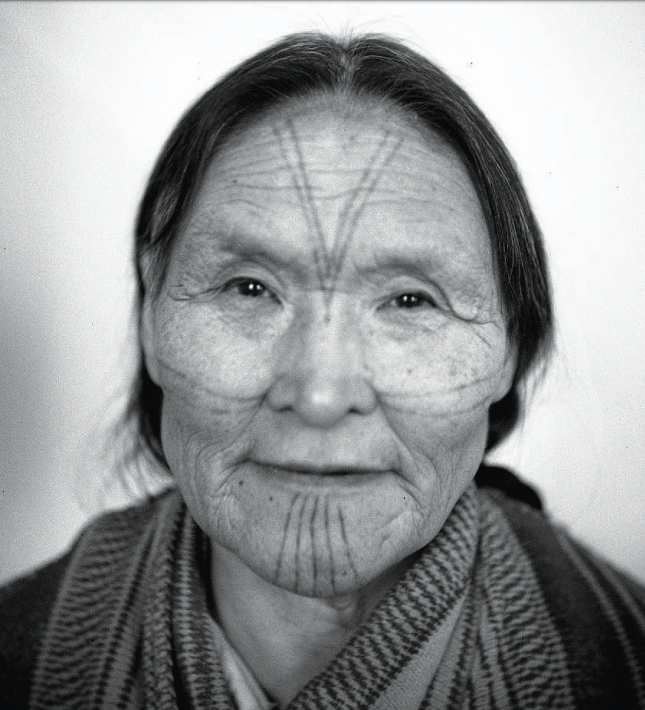


Photo credits on this page
The small pictures above come from Wikimedia Commons under free licences. Some are cropped to fit.
- Kakiniit: Henry Busse, Public domain, source
- Labret: Metalhead64, CC BY-SA 3.0, source
- Inuit snow goggles: McLeod, Public domain, source