
Inuit snow goggles
Traditional Arctic eyewear with narrow slits to prevent snow blindness
Inuit and Yupik peoples of the Arctic developed these carved goggles to protect eyes from glare. Made from local materials like wood or bone, they use narrow slits to limit light entry and improve focus.
- Made from driftwood, bone, ivory, or antler
- Narrow slits improve visual acuity like a pinhole
- Soot applied inside helps reduce glare
- Called ilgaak or iggaak in Inuktitut dialects
- Prevents snow blindness in bright Arctic conditions
What it is
These goggles are a form of traditional eyewear designed to shield the eyes from intense glare. They consist of a solid piece carved to fit the wearer’s face closely. Narrow horizontal slits are cut into the front, allowing only a small amount of light to enter. This design blocks most reflected light from snow while improving visual clarity through a pinhole effect. The tight fit ensures no stray light reaches the eyes from the sides or bottom.
History and origin
Inuit and Yupik communities in the Arctic created these goggles to cope with bright snowy environments. The design has been used for generations to prevent snow blindness. Different dialects have specific names for them, such as ilgaak in Kivalliq and nigaugek in Central Alaskan Yup’ik. The construction methods rely on locally available resources like driftwood, bone, or antler.
What it means
The goggles represent practical innovation adapted to harsh Arctic conditions. They are not merely functional but also reflect deep knowledge of local materials and optics. By using narrow slits, users gain better focus despite reduced light. The application of soot inside further reduces glare, showing an understanding of light absorption. This traditional tool remains a symbol of indigenous ingenuity in eye protection.
The science
The narrow slits function similarly to a pinhole camera, restricting light rays to improve acuity. By limiting the angle of vision, they reduce the scattering of light that causes snow blindness. However, this restriction can increase the risk of tripping due to a narrower field of view. Wider slits offer more peripheral vision but allow more light in, requiring a balance between safety and clarity.
In culture
These goggles are integral to the cultural heritage of Arctic peoples. They appear in historical records and museum collections as examples of traditional craftsmanship. The terms used for them vary across dialects, reflecting linguistic diversity within Inuit and Yupik groups. Today, they are recognised as effective predecessors to modern sunglasses, demonstrating early optical engineering.


Questions people ask about Inuit snow goggles
What materials are used to make these goggles?
They are traditionally carved from driftwood, especially spruce, bone, walrus ivory, caribou antler, or seashore grass. An adjustable strap made of sinew, leather, or rawhide holds them in place.
How do the slits help with vision?
The narrow horizontal slits restrict the amount of light entering the eye, which reduces glare. They also improve visual acuity by acting like a pinhole camera, though this narrows the field of view.
What are the different names for these goggles?
In Inuktitut, they are called ilgaak or iggaak depending on the dialect. Central Alaskan Yup’ik speakers call them nigaugek, while Cup’ig speakers use igguag. Central Siberian Yupik uses iyegaatek.
Good reading and sources
The facts on this page come from the Wikipedia article "Snow goggles", written by its contributors and used under the CC BY-SA 4.0 licence, and from its Wikidata record (CC0). EveryFaceShape rewrote the text in its own words, with AI assistance, and compares every page with the article to make sure no passage is copied. It may be reused under the same CC BY-SA 4.0 licence with a link back.
It may contain mistakes, and figures change over time. Nothing here is investment or buying advice. If something is wrong, tell us. Last refreshed 2026-11-15.
Like Inuit snow goggles
All eyewear frames WorldGlasses
Vision eyewear with lenses in a frame for correction, protection, or fashion.Frame · Most faces
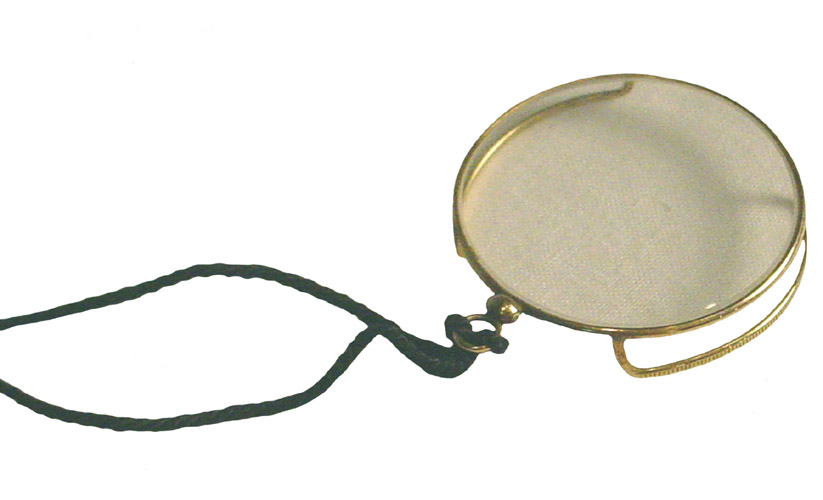 🇩🇪 GermanyMonocle
A single corrective lens held in the eye socket by one eye.Frame · Most faces · 1830
 🇬🇧 United KingdomWindsor glasses
Round metal frames with a saddle bridge.Frame · Most faces · 1840
 WorldHorn-rimmed glasses
Thick-framed eyewear imitating horn or tortoiseshell.Frame · Most faces · 1917