
Labret
A body piercing placed below the bottom lip and above the chin.
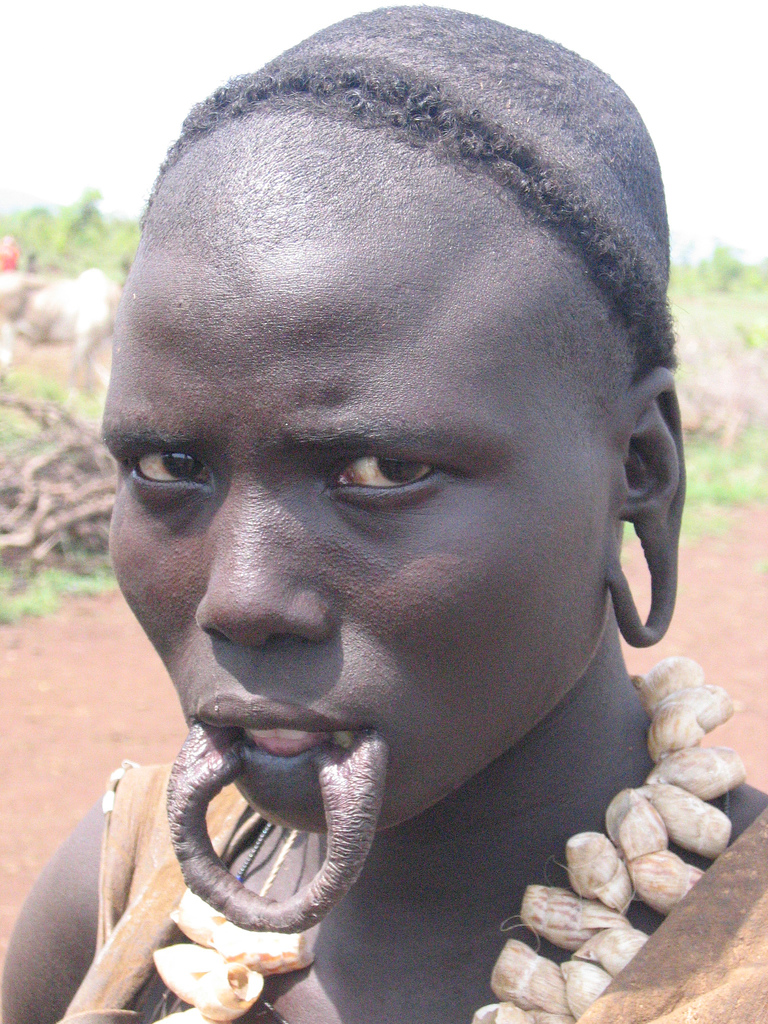
This adornment involves jewellery attached to the lower lip area. It has deep historical roots in North America and Mesoamerica, where it signified social rank and eloquence among indigenous groups.
- The piercing sits between the lower lip and the chin.
- Aztecs called them tentetl, linking them to noble speech.
- Healing typically requires six to nine months.
- Northwest Coast tribes used them to mark social status.
- Initial sizes are often 1.2, 1.6, or 2.0 mm.
What it is
A labret is a type of body piercing located on the lower face. Specifically, the jewellery sits in the tissue between the bottom lip and the chin. While the word literally means any lip attachment, it usually refers to this specific spot. Variations exist based on placement. A vertical labret uses a curved barbell through the lip tissue itself. Other styles include snake bites, which are paired piercings near the corners of the mouth. Spiderbites involve two holes close together on one side. A lowbret is placed very close to the chin line. The initial hole size is often small, allowing for gradual stretching later.
History and origin
This practice spans millennia across different continents. On the American Northwest Coast, it served as a marker of status for over four thousand years. Gender roles shifted over time; males wore them earlier, while females adopted them later in the northern regions. In Alaska, Tlingit women of high status wore them when Europeans arrived. The Russian name for the Tlingit people actually derives from the local word for this piercing. In Mesoamerica, the Aztecs used labrets called tentetl. These were linked to nobility and the expectation of eloquent speech among leaders.
What it means
The adornment carries significant cultural weight beyond simple decoration. Among Northwest Coast tribes, it distinguished individuals directly. Masks representing high-status figures also featured labrets. For the Aztecs, the placement highlighted the right to speak and be heard. Nobles were expected to speak without stuttering or haste. The jewellery underscored their authority and connection to power. Marina LaSalle notes that it remains a symbol of social identity for descendants of these heritage groups today.
Styling and care
Modern wearers choose from several distinct styles. The vertical labret passes through the lip tissue rather than just the front edge. Initial piercings range from 1.2 to 2.0 mm. After healing, some people stretch the piercing gradually. Sizes can exceed 10 mm. Larger jewellery typically consists of round or oval plugs. The healing process requires patience, taking anywhere from six to nine months depending on individual factors.
In culture
The term originates from the Latin word for lip. Pronunciation varies between LAY-bruht and lo-BRAY. The latter is common in the industry but stems from a misunderstanding of French origins. The French word was actually borrowed from English. Anthropological studies highlight how the piercing reflects complex social contexts. It is not merely about aesthetics but about belonging and rank within specific communities.


Questions people ask about Labret
What is the difference between a standard labret and a vertical labret?
A standard labret usually goes through the skin just below the lip. A vertical labret uses a curved barbell that enters and exits through the lip tissue itself, creating a vertical appearance rather than a horizontal one.
How long does it take to heal?
The healing period generally ranges from six to nine months. This timeframe allows the tissue to stabilise before changing jewellery or attempting to stretch the piercing to larger sizes.
Did ancient cultures use labrets?
Yes. The Aztecs used them as tentetl to signify nobility and eloquence. Northwest Coast Indigenous peoples wore them for thousands of years to indicate social rank and gender roles within their communities.
Good reading and sources
The facts on this page come from the Wikipedia article "Labret", written by its contributors and used under the CC BY-SA 4.0 licence, and from its Wikidata record (CC0). EveryFaceShape rewrote the text in its own words, with AI assistance, and compares every page with the article to make sure no passage is copied. It may be reused under the same CC BY-SA 4.0 licence with a link back.
It may contain mistakes, and figures change over time. Nothing here is investment or buying advice. If something is wrong, tell us. Last refreshed 2026-11-15.
Like Labret
All adornment 🇲🇽 MexicoCalavera
Decorative or edible skulls made for the Mexican Day of the Dead.Adornment
 🇪🇹 Ethiopia and 3 moreLip plate
A large disc inserted into a stretched lip piercing as body modification.Adornment
 WorldNose jewellery
Ornaments worn through nostril or septum piercings.Adornment · Most faces
 🇮🇳 India and 4 moreBindi
A coloured dot worn on the forehead in South and Southeast Asia.Adornment · Most faces