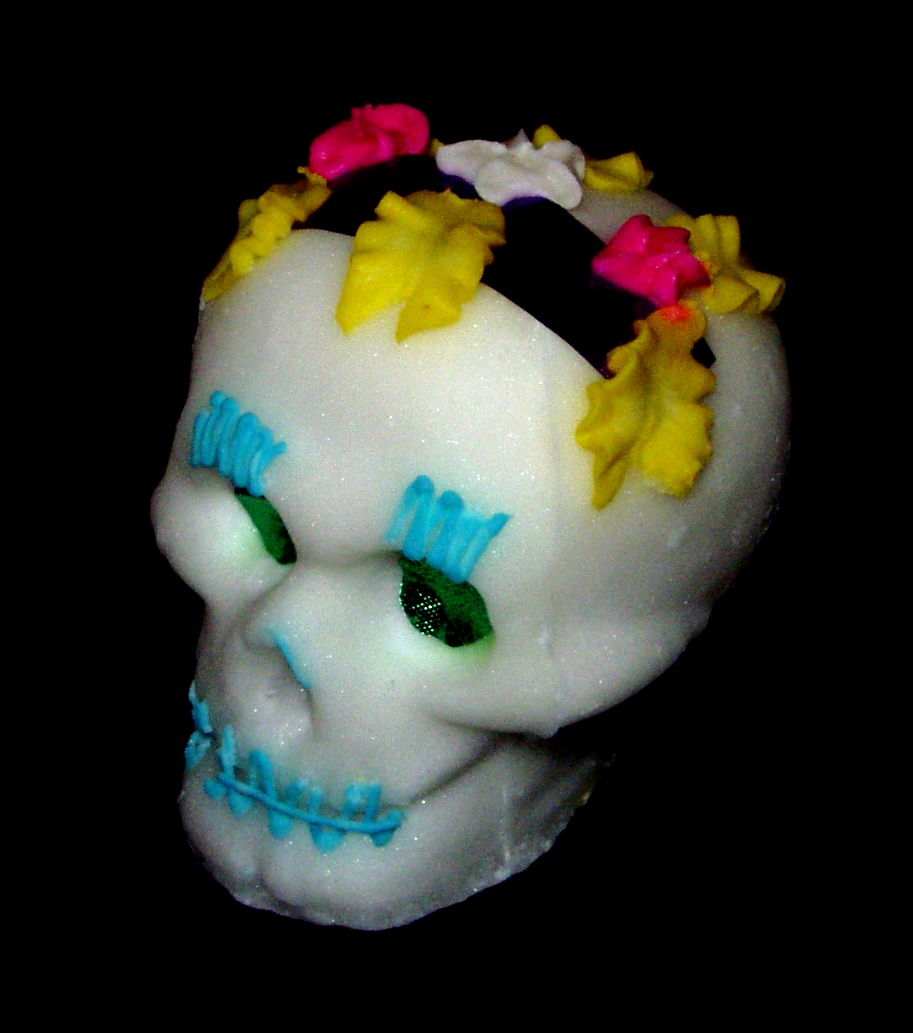
Calavera
Decorative or edible skulls made for the Mexican Day of the Dead.
A calavera is a representation of a human skull used in Mexico during the Day of the Dead. These items are crafted from sugar, clay, or paper to honour the deceased and celebrate life.
- Sugar skulls are called alfeñiques when made from cane sugar.
- First commercial sales of skeletal figures date to the 1740s.
- José Guadalupe Posada created the famous Catrina character.
- Clay calaveras are often painted metallic silver with beaded eyes.
- Literary calaveras are humorous poems about the deceased.
What it is
A calavera is a depiction of a skull or skeleton central to Mexican celebrations. They appear as edible treats made from cane sugar or clay toys, often moulded into shape. Decorations include coloured icing, beads, feathers, and metallic foil. The term also covers satirical poetry and face painting that mimics skeletal features. These items serve as gifts, altar offerings, or artistic expressions during specific holidays.
History and origin
The tradition blends indigenous beliefs with Spanish Catholic influence. Pre-Columbian cultures viewed bones as repositories of power. Spanish colonizers introduced memento mori symbols. By the 1740s, skeletal figures were sold commercially. In the 19th century, caricaturists like José Guadalupe Posada popularised printed calaveras. Diego Rivera later expanded Posada’s Catrina into a full figure. Today, these skulls remain vital to cultural identity and holiday rituals.
What it means
Calaveras act as lighthearted emblems of death, reminding people of mortality without fear. They bridge the gap between the living and the departed. Families place them on altars called ofrendas to welcome spirits back home. The practice suggests ancestors consume the essence of food rather than the physical items. Literary versions use humour to critique society while acknowledging shared human fragility.
Styling and care
Artisans spend months crafting elaborate sugar skulls using traditional molds. Production focuses on visual appeal over taste, often adding inedible decorations like beads. Names are written on foreheads with icing. Clay versions are painted silver or bright colours with beaded eyes. Face painting mimics these designs for urban celebrations. Literary calaveras are short poems given as gifts to friends and family.
In culture
Posada’s Catrina remains the most iconic image, wearing a feathered hat. Artists continue to reinterpret this figure in various media. The Alfeñique fair in Toluca is a major hub for purchasing these items. Modern urban centres have adopted face painting trends inspired by these traditions. Satirical prints historically targeted politicians, a practice that continues in contemporary press.


Questions people ask about Calavera
What materials are used to make a calavera?
Calaveras are typically made from cane sugar, clay, chocolate, or wood. Sugar versions are moulded and decorated with icing, beads, and foil. Clay toys are painted in various colours. Some are purely decorative folk art, while others are intended to be eaten.
Who created the famous Catrina figure?
José Guadalupe Posada originally illustrated Catrina in his prints. Diego Rivera later elaborated her into a full figure wearing a long dress and large feathered hat. This image has become the most recognised symbol associated with the Day of the Dead.
Are calaveras only for eating?
No. While some sugar skulls are edible, many are elaborate folk art pieces meant for display. These often contain inedible decorations like feathers or beads. They are placed on altars as offerings or kept as decorative items after the holiday passes.
What is a literary calavera?
A literary calavera is a humorous poem or satirical text. It depicts living people or celebrities as skeletons to mock their traits or remind readers of mortality. This tradition began with 19th-century newspapers and continues today in print and social media.
Good reading and sources
The facts on this page come from the Wikipedia article "Calavera", written by its contributors and used under the CC BY-SA 4.0 licence, and from its Wikidata record (CC0). EveryFaceShape rewrote the text in its own words, with AI assistance, and compares every page with the article to make sure no passage is copied. It may be reused under the same CC BY-SA 4.0 licence with a link back.
It may contain mistakes, and figures change over time. Nothing here is investment or buying advice. If something is wrong, tell us. Last refreshed 2026-11-15.
Like Calavera
All adornment 🇯🇵 Japan and 4 moreTeeth blackening
A traditional custom of dyeing teeth black to signify adulthood and beauty.Makeup
 🇮🇳 India and 4 moreBindi
A coloured dot worn on the forehead in South and Southeast Asia.Adornment · Most faces
 🇯🇵 JapanOhaguro
A Japanese tradition of blackening teeth with iron and tannins.Makeup · 1000
 WorldNose jewellery
Ornaments worn through nostril or septum piercings.Adornment · Most faces