
Wayfarer
A trapezoidal eyewear frame designed in 1952 and revived multiple times through film placements.
The Wayfarer is a style of sunglasses and optical frames manufactured by Ray-Ban since 1952. Designed by Raymond Stegeman for Bausch & Lomb, the model gained cultural prominence through music icons and later through strategic product placement in cinema during the 1980s.
- Designed in 1952 by Raymond Stegeman for Bausch & Lomb.
- Sales surged after product placement in 1980s films like Risky Business.
- Acquired by Italian Luxottica Group in 1999 for $640 million.
- Redesigned in 2001 to be smaller and made of lighter plastic.
- Collaboration with Facebook Reality Labs launched smart glasses in 2021.
What it is
The Wayfarer is a distinctive eyewear design characterised by a thick, trapezoidal frame shape. Originally crafted from acetate, the structure features sturdy arms that contribute to a robust appearance. The design utilised new plastic molding technology at its inception, allowing for a form that was both durable and visually striking. Over time, materials evolved, including a shift to lighter injected plastic in the early 2000s to improve comfort and functionality.
History and origin
Ray-Ban introduced the model in 1952, designed by Raymond Stegeman while working for Bausch & Lomb. It achieved significant popularity in the 1950s and 1960s before sales declined sharply in the 1970s. A major revival occurred in the 1980s driven by extensive product placement in films and television series. The brand changed ownership in 1999 when Luxottica acquired Ray-Ban, leading to further design updates and another resurgence in the mid-2000s following the reintroduction of vintage styles.
What it means
The frame has been associated with rebellion and non-conformity, often described as hinting at unstable dangerousness tempered by sturdiness. Its cultural status was cemented by adoption among music and film icons, linking the style to artistic credibility and coolness. Strategic marketing campaigns emphasised an edgy aesthetic, connecting the glasses to youth culture and media trends across several decades.
Styling and care
The frames are worn as both sunglasses and optical devices. Stylists note that the trapezoidal shape offers a balanced look suitable for various facial structures. The design has undergone modifications, such as reduced angularity and smaller dimensions in the 2000s, to enhance wearability. Vintage versions remain popular alongside modern iterations, with consumers choosing between original acetate builds and newer lightweight plastics.
In culture
The Wayfarer appears frequently in cinema and music videos, serving as a visual shorthand for specific character types or eras. Notable appearances include roles played by James Dean and Tom Cruise, which significantly boosted sales. Musicians such as Michael Jackson and Madonna also wore the style, reinforcing its status as a pop culture staple. Literary works and songs have referenced the glasses, embedding them in broader artistic narratives.


Questions people ask about Wayfarer
Who designed the Wayfarer frame?
American optical designer Raymond Stegeman created the design in 1952 while employed by Bausch & Lomb, which was the parent company of Ray-Ban at that time.
Why did Wayfarer sales decline in the 1970s?
After their initial popularity in the 1950s and 1960s, sales dropped significantly. By 1981, only 18,000 pairs were sold, placing the model on the verge of discontinuation before a revival strategy was implemented.
How did product placement affect Wayfarers?
In 1982, Ray-Ban signed a deal to feature the glasses in movies and TV shows. This strategy led to over 60 placements annually, with key appearances in films like Risky Business driving sales up to 360,000 pairs in a single year.
What changes were made to the design in 2001?
The RB2132 model underwent a redesign to address unpopularity. Frames became smaller and less angular, switching from acetate to lighter injected plastic to improve comfort and allow the glasses to perch on the head.
Good reading and sources
- COMPANY NEWS; BAUSCH & LOMB SELLING SUNGLASS BUSINESS TO LUXOTTICA (Published 1999)The New York Times, Article
- Dan Aykroyd and John Landis: how we made The Blues BrothersThe Guardian, Article
- Ray-Ban Wayfarer on WikipediaEncyclopedia
- More photos on Wikimedia CommonsPhotos
- Wikidata recordOpen data
The facts on this page come from the Wikipedia article "Ray-Ban Wayfarer", written by its contributors and used under the CC BY-SA 4.0 licence, and from its Wikidata record (CC0). EveryFaceShape rewrote the text in its own words, with AI assistance, and compares every page with the article to make sure no passage is copied. It may be reused under the same CC BY-SA 4.0 licence with a link back.
It may contain mistakes, and figures change over time. Nothing here is investment or buying advice. If something is wrong, tell us. Last refreshed 2026-11-15.
Like Wayfarer
All eyewear frames 🇨🇳 China and 2 moreSunglasses
Protective eyewear designed to shield eyes from bright sunlight and high-energy visible light.Frame · 1929
 WorldHorn-rimmed glasses
Thick-framed eyewear imitating horn or tortoiseshell.Frame · Most faces · 1917
 🇫🇷 France and 1 morePince-nez
Eyeglasses that clip onto the nose bridge without earpieces, popular in the late nineteenth and early twentieth centurieFrame · Most faces · 1840
 🇫🇷 FranceLorgnette
Spectacles mounted on a handle for holding in place.Frame · 1770
More from Ray-Ban
All of them 🇺🇸 United StatesBrowline glasses
Eyeglass frames with a bold upper rim resembling eyebrows.Frame · Most faces · 1947
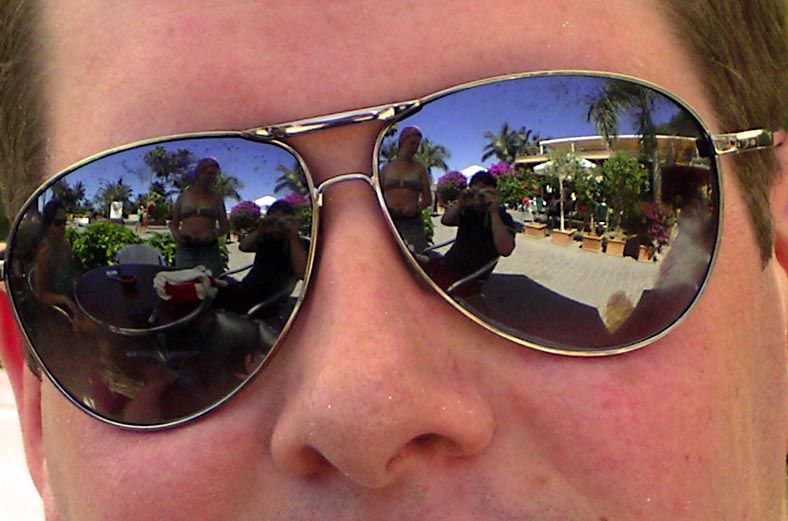 🇺🇸 United StatesAviator sunglasses
Teardrop-lensed eyewear designed for pilots and adapted for fashion.Frame · Most faces · 1937
 🇺🇸 United StatesMirrored sunglasses
Sunglasses with a reflective outer coating that reduces glare and light transmission.Frame · Most faces
 🇺🇸 United StatesGI glasses
Government-issued eyewear for US military recruits, known by dysphemisms like BCGs.Frame · Most faces