Applied
Makeup, paint and powders. 31 face guides on EveryFaceShape so far.
Applied features are painted or powdered on and washed off: kohl and kajal, thanaka paste, sindoor and kumkum, contour and highlight, the white oshiroi of geisha and Kabuki actors, and the painted faces of Kathakali and Peking opera. Some last an evening, some a day; many are renewed every morning as part of faith, beauty or work.
Daily and devotional
Kajal is applied to the eyes and thanaka to the cheeks every day by millions of people. The tilak and the tripundra of ash are applied after worship, and sindoor by many married Hindu women daily. Kumkum, made from turmeric and lime, is offered and shared at festivals. These marks are renewed daily and carry meaning by tradition.
Stage and festival
Stage makeup takes hours: Kathakali artists build the chutti frame and paint green, red and black faces; Kabuki actors paint their own kumadori; Peking opera performers paint lianpu designs. For the Day of the Dead, faces in Mexico are painted as calaveras. In the West, contour and highlight, borrowed from the stage, became everyday makeup in the 2010s.
Famous applied face guides


Further reading
 🇮🇳 India and 4 moreBindi
A coloured dot worn on the forehead in South and Southeast Asia.Adornment · Most faces
 🇯🇵 JapanOhaguro
A Japanese tradition of blackening teeth with iron and tannins.Makeup · 1000
 WorldVibhuti
Sacred ash used in Hindu rituals and applied as forehead markings.Makeup
 🇮🇳 IndiaTilaka
A traditional Hindu forehead mark applied with paste or ash to signify faith and spiritual identity.Adornment
 🇮🇳 India and 1 moreSindoor
A vermilion powder worn by married Hindu women to mark marital status.Makeup
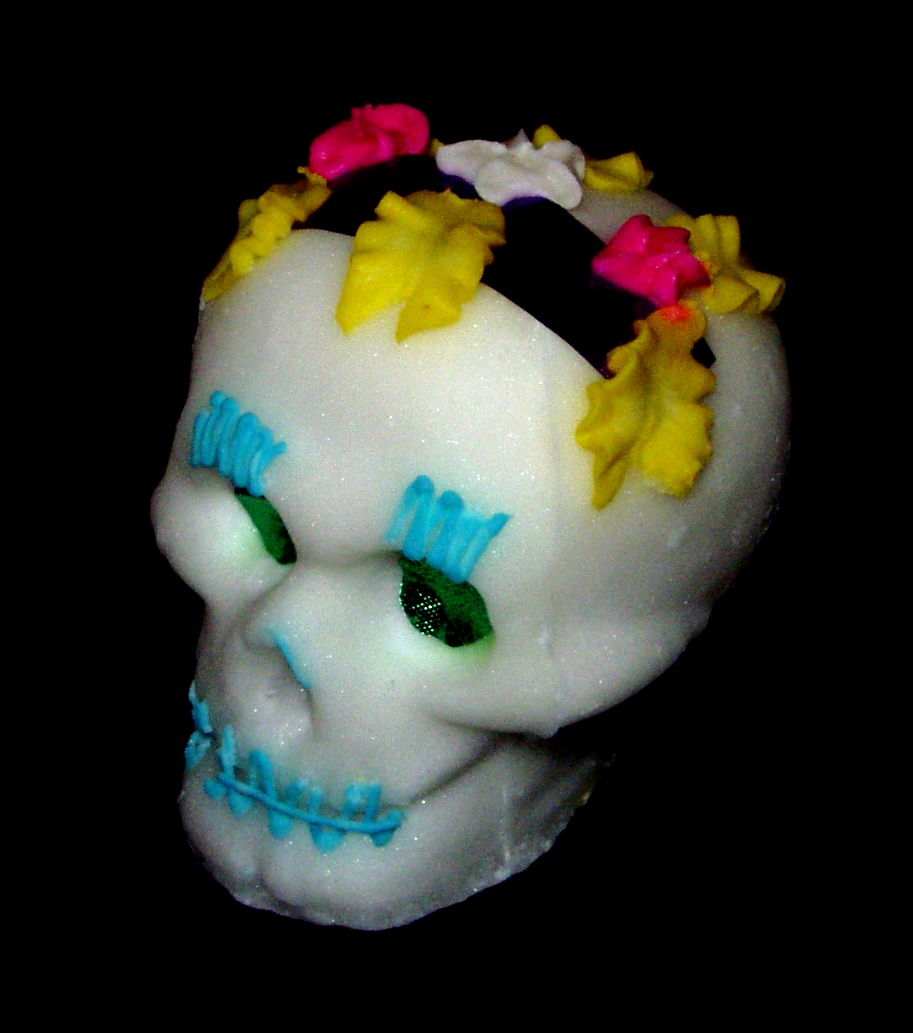 🇲🇽 MexicoCalavera
Decorative or edible skulls made for the Mexican Day of the Dead.Adornment
 🇮🇳 IndiaUrdhva Pundra
Vertical Vaishnava forehead mark denoting devotion to Vishnu.Adornment · Most faces
 WorldUrna
A spiral mark on the forehead in Buddhist art.Adornment
 🇮🇳 IndiaKumkum
Red forehead powder used for religious and social markings in India.Adornment · Most faces
 🇲🇲 MyanmarThanaka
Ground bark paste used as face makeup and sun protection in Myanmar.Makeup · Most faces
 🇮🇳 IndiaTripundra
Three horizontal ash lines on the forehead worn by Shaivite Hindus.Adornment
Photo credits on this page
The small pictures above come from Wikimedia Commons under free licences. Some are cropped to fit.
- Bindi: Vinay Sahay, CC BY-SA 4.0, source
- Ohaguro: Utagawa Kunisada, Public domain, source
- Kumadori: Unknown author, Public domain, source
- Vibhuti: Vinoth Chandar, CC BY 2.0, source
- Tilaka: Robert Vane Russell (1873-1915), Public domain, source
- Sindoor: Masum-al-hasan, CC BY-SA 3.0, source
- Calavera: Unknown author, CC BY-SA 3.0, source
- Contouring: Tobias ToMar Maier, CC BY-SA 3.0, source
- Kohl: Camila Zanon., CC BY 2.0, source
- Urdhva Pundra: Abhisek Sarda, CC BY 2.0, source
- Urna: Iudexvivorum, CC0, source
- Kumkum: Thamizhpparithi Maari, CC BY-SA 3.0, source
- Oshiroi: Conveyor Belt Sushi, CC BY 2.0, source
- Thanaka: Garonzi Stefania, CC BY-SA 4.0, source
- Tripundra: Vivek Kondur, CC BY 2.0, source