Makeup and face art
Kajal and kohl, contouring, Kathakali and Kabuki makeup, thanaka and face paint. 30 face guides on EveryFaceShape so far.
Makeup and face art cover everything applied to the face: kohl and kajal around the eyes, blush and contour, the white oshiroi of Japan, thanaka paste in Myanmar, and the painted faces of Kathakali, Kabuki and Peking opera. Some are everyday beauty, some are faith or festival, and some are stage conventions that tell an audience exactly who a character is.
Old everyday makeup
Kohl was used in Egypt more than 5,000 years ago, made with galena and malachite. In South Asia, kajal is made at home from lamp soot and ghee. Thanaka, ground bark paste, is worn daily on the cheeks in Myanmar. White face paints were worn in Japan and in Renaissance Europe, where the lead in ceruse harmed wearers. Contouring came from the stage and became a mass fashion in the 2010s.
The painted stage
Asian classical theatres made face painting a language. In Kathakali from Kerala, green faces are noble heroes and red-marked ones proud villains. In Kabuki, kumadori lines in red mark heroes and in blue villains. In Peking opera, red is loyalty, black integrity and white cunning. Sichuan opera adds bian lian, changing masks in a split second. In Mexico, faces are painted as calaveras for the Day of the Dead.
Famous makeup face guides


Still to be written: Kathakali.
Further reading
 🇨🇳 ChinaSichuan opera
A Chinese theatre form from Sichuan known for mask changing and distinct makeup.Makeup · 1700
 🇯🇵 JapanOhaguro
A Japanese tradition of blackening teeth with iron and tannins.Makeup · 1000
 🇯🇵 JapanKumadori
Theatrical makeup for kabuki actors using coloured stripes to show character traits.Makeup
 🇯🇵 JapanHikimayu
A pre-modern Japanese practice of removing natural eyebrows and painting new ones on the forehead.Makeup
 🇨🇳 ChinaBian lian
A Sichuan opera technique where performers change masks or colours instantly to show emotion.Makeup
 🇮🇳 IndiaTilaka
A traditional Hindu forehead mark applied with paste or ash to signify faith and spiritual identity.Adornment
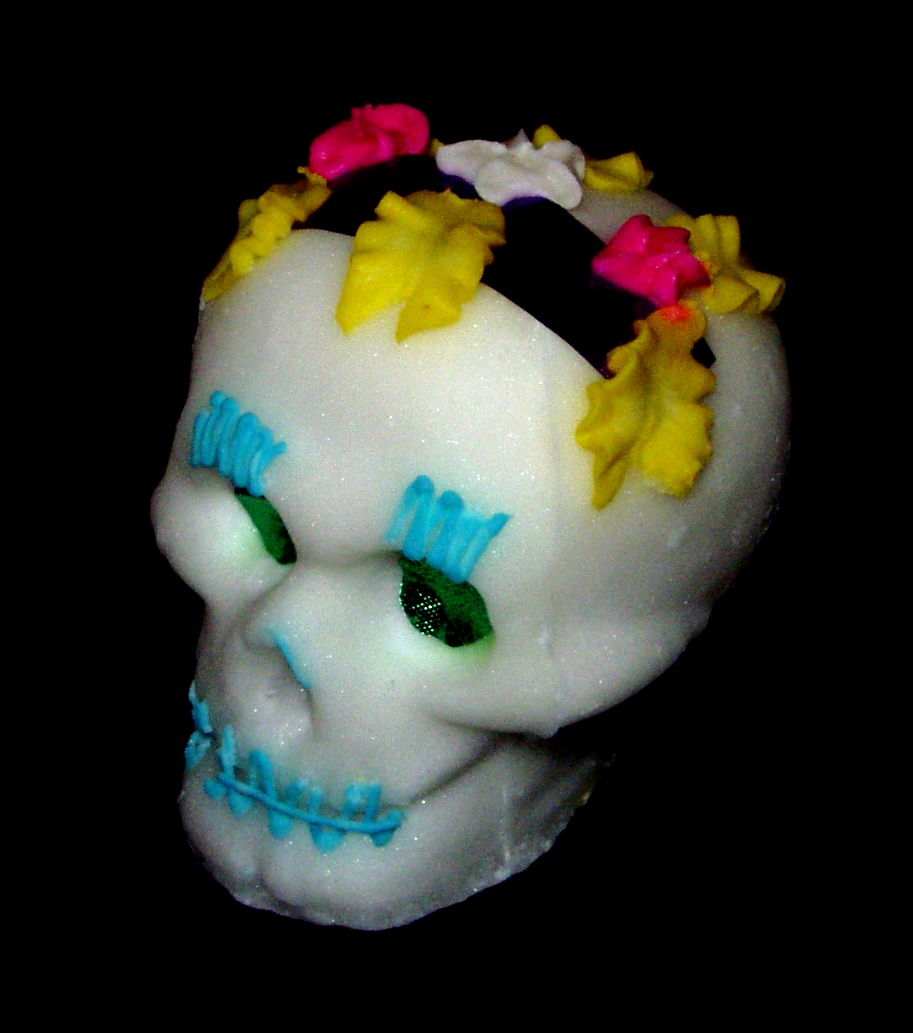 🇲🇽 MexicoCalavera
Decorative or edible skulls made for the Mexican Day of the Dead.Adornment
 🇨🇳 ChinaJing
A Chinese opera role for mighty men, defined by heavy face painting.Makeup
 🇮🇳 India and 4 moreBindi
A coloured dot worn on the forehead in South and Southeast Asia.Adornment · Most faces
 🇯🇵 Japan and 4 moreTeeth blackening
A traditional custom of dyeing teeth black to signify adulthood and beauty.Makeup
🇲🇽 MexicoDía de los Muertos face paint
Skull-style makeup worn during Mexican Day of the Dead celebrations to honour ancestors.Makeup · Most faces · 1913
Photo credits on this page
The small pictures above come from Wikimedia Commons under free licences. Some are cropped to fit.
- Bindi: Vinay Sahay, CC BY-SA 4.0, source
- Ohaguro: Utagawa Kunisada, Public domain, source
- Kumadori: Unknown author, Public domain, source
- Hikimayu: Unknown author, Public domain, source
- Bian lian: Yongxinge, CC BY-SA 3.0, source
- Tilaka: Robert Vane Russell (1873-1915), Public domain, source
- Calavera: Unknown author, CC BY-SA 3.0, source
- Jing: G41rn8, CC BY-SA 4.0, source
- Teeth blackening: momo, CC BY 2.0, source
- Contouring: Tobias ToMar Maier, CC BY-SA 3.0, source
- Sichuan opera: No machine-readable author provided. Dice~commonswiki assumed (based o, CC BY-SA 3.0, source
- Kohl: Camila Zanon., CC BY 2.0, source
- Oshiroi: Conveyor Belt Sushi, CC BY 2.0, source
- Thanaka: Garonzi Stefania, CC BY-SA 4.0, source