Stage, dance and screen
Theatre and dance makeup and the looks of film stars. 52 face guides on EveryFaceShape so far.
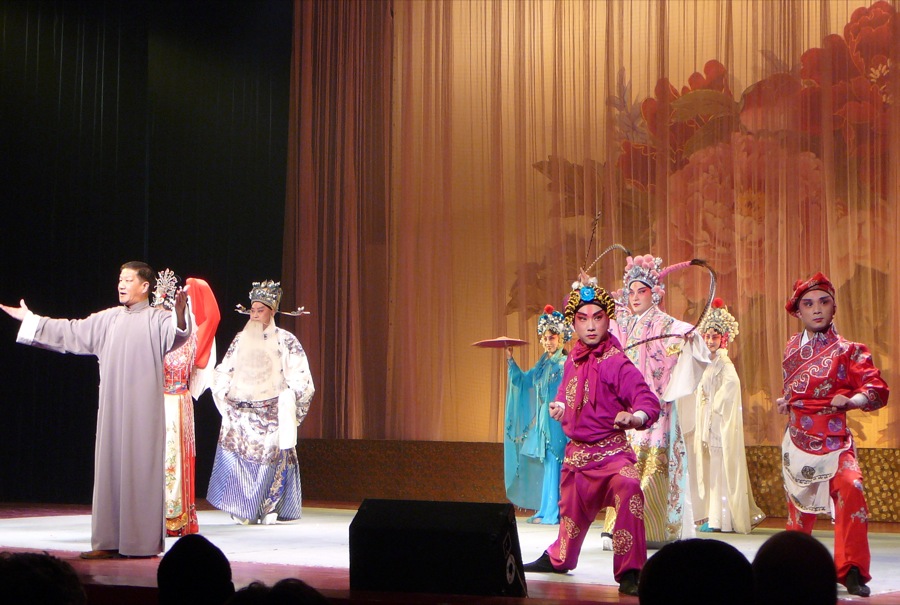
Stage, dance and screen have their own faces: the painted veshams of Kathakali, the kumadori of Kabuki, the lianpu of Peking opera, the masks that change in a flash in Sichuan opera, the faces of Theyyam and Yakshagana, and the looks of film stars that became everyday fashions. Many of these traditions are taught for years and recognised by UNESCO.
Faces that tell the story
In Asian classical theatre, a face tells the audience who a character is. Kathakali's green pacha marks heroes and its red-marked kathi proud villains. Kabuki's red lines mark heroes and its blue lines villains. Peking opera uses red for loyalty, black for integrity and white for cunning. The painting takes hours and is often done by the performer.
Screen looks
Film turned stage methods into fashions. The pencil moustaches of 1930s and 1940s Hollywood, the cat-eye frames and winged liner of the 1950s, the bindis and kajal of Indian film heroines and the aviators of 1980s cinema all spread from the screen. Contouring, once a stage trick for flattening light, became an everyday look in the 2010s.
Famous stage, dance and screen face guides


Still to be written: Kathakali, Theyyam, Yakshagana.
Further reading
 WorldHorn-rimmed glasses
Thick-framed eyewear imitating horn or tortoiseshell.Frame · Most faces · 1917
 🇯🇵 JapanKumadori
Theatrical makeup for kabuki actors using coloured stripes to show character traits.Makeup
 🇺🇸 United StatesGrill
Removable dental jewelry worn over teeth for fashion and status.Adornment · 1980
 🇬🇧 United KingdomSnooker glasses
Corrective eyewear designed for cue sports to maintain optical alignment while bending.Frame · Most faces · 1938
 🇨🇳 China and 2 moreSunglasses
Protective eyewear designed to shield eyes from bright sunlight and high-energy visible light.Frame · 1929
 🇯🇵 JapanHikimayu
A pre-modern Japanese practice of removing natural eyebrows and painting new ones on the forehead.Makeup
 🇨🇳 ChinaBian lian
A Sichuan opera technique where performers change masks or colours instantly to show emotion.Makeup
 🇺🇸 United StatesMirrored sunglasses
Sunglasses with a reflective outer coating that reduces glare and light transmission.Frame · Most faces
 🇨🇳 ChinaJing
A Chinese opera role for mighty men, defined by heavy face painting.Makeup
 WorldFake moustache
A prosthetic facial hair piece used for disguise, performance, or style.Moustache
 WorldGoggles
Protective eyewear that encloses the eye area to block debris, water, or chemicals.Frame · Most faces
 WorldShooting glasses
specialized corrective eyewear for sport shooting competitionsFrame · Most faces
 WorldEyebrow piercing
A vertical surface piercing through the eyebrow skin.Adornment
 🇦🇹 Austria and 2 moreRimless eyeglasses
Eyewear where lenses attach directly to the bridge and temples without a surrounding frame.Frame · Most faces
 🇫🇷 FranceLorgnette
Spectacles mounted on a handle for holding in place.Frame · 1770
 🇯🇵 JapanOhaguro
A Japanese tradition of blackening teeth with iron and tannins.Makeup · 1000
 🇨🇳 ChinaSichuan opera
A Chinese theatre form from Sichuan known for mask changing and distinct makeup.Makeup · 1700
 🇫🇷 France and 1 morePince-nez
Eyeglasses that clip onto the nose bridge without earpieces, popular in the late nineteenth and early twentieth centurieFrame · Most faces · 1840
 🇺🇸 United States and 1 moreWayfarer
A trapezoidal eyewear frame designed in 1952 and revived multiple times through film placements.Frame · Oval faces · 1952
 WorldGlasses
Vision eyewear with lenses in a frame for correction, protection, or fashion.Frame · Most faces
 WorldTeardrop tattoo
A tear-shaped mark placed under the eye with varied cultural meanings.Adornment
WorldShutter Shades
Sunglasses with horizontal slats instead of lensesFrame · Most faces · 1950
 WorldGroucho glasses
Novelty frames with fake nose and moustache mimicking Groucho MarxFrame
WorldOversized sunglasses
Large-lens eyewear for sun protection and bold style.Frame · Oval faces · 1970
🇲🇽 MexicoDía de los Muertos face paint
Skull-style makeup worn during Mexican Day of the Dead celebrations to honour ancestors.Makeup · Most faces · 1913
WorldRounded eyebrows
An eyebrow shape with a curved peak that follows the eye's contour.Brows · Heart-shaped faces
WorldWraparound sunglasses
Curved frames that wrap around the face for full coverage.Frame · Most faces
WorldHalf-rim glasses
Eyewear with a top frame and exposed bottom lenses held by wire.Frame · Oval faces
Photo credits on this page
The small pictures above come from Wikimedia Commons under free licences. Some are cropped to fit.
- Sunglasses: Rich Niewiroski Jr., CC BY 2.5, source
- Rimless eyeglasses: Document1, CC BY-SA 3.0, source
- Lorgnette: Museum Rotterdam, CC BY-SA 3.0, source
- Theatrical makeup: Mrgarden 2342, CC BY-SA 4.0, source
- Ohaguro: Utagawa Kunisada, Public domain, source
- Kumadori: Unknown author, Public domain, source
- Hikimayu: Unknown author, Public domain, source
- Peking opera makeup: Art Poskanzer, CC BY 2.0, source
- Bian lian: Yongxinge, CC BY-SA 3.0, source
- Mirrored sunglasses: Elvert Barnes, CC BY-SA 2.0, source
- Jing: G41rn8, CC BY-SA 4.0, source
- Fake moustache: ABC Photo, Public domain, source
- Goggles: Joe Schneid, Louisville, Kentucky, CC BY 3.0, source
- Shooting glasses: Francis Flinch, CC BY-SA 4.0, source
- Eyebrow piercing: Jonny, CC BY 3.0, source
- Sichuan opera: No machine-readable author provided. Dice~commonswiki assumed (based o, CC BY-SA 3.0, source
- Pince-nez: Łeba, CC BY 3.0, source
- Wayfarer: Starman1984, CC BY-SA 3.0, source
- Glasses: Jacek Halicki, CC BY-SA 4.0, source
- Teardrop tattoo: RJ, Public domain, source
- Horn-rimmed glasses: User:Robin Clement, CC BY-SA 3.0, source
- Groucho glasses: Mykl Roventine, CC BY 2.0, source
- Pencil moustache: Roland Godefroy, CC BY 2.5, source
- Grill: Bradley G., CC BY 2.0, source
- Snooker glasses: SMcCandlish, CC BY 3.0, source