
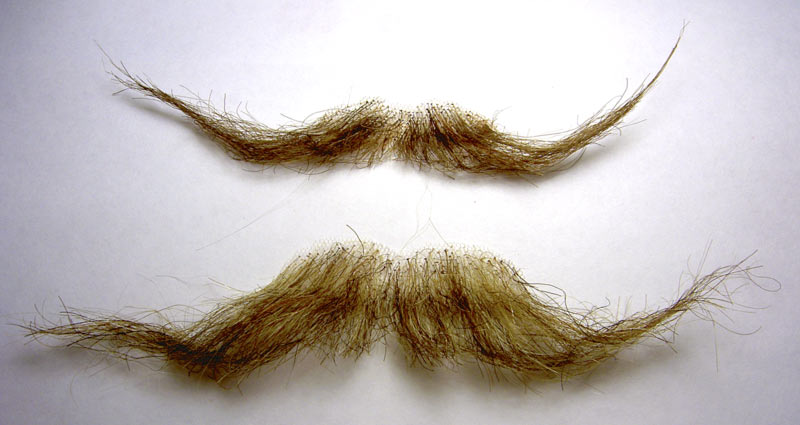
Fake moustache
A prosthetic facial hair piece used for disguise, performance, or style.
This is an artificial item of makeup applied to the upper lip. It has been used since ancient times for religious symbols, theatrical roles, and disguises. Today it remains a popular prop for comedy and costume.
- Pharaohs wore metal beards to connect with the god Osiris.
- Victorian fashion made false facial hair popular for aesthetics.
- Lewis Powell carried one during the Lincoln assassination attempt.
- Commercial sales peaked in the mid-twentieth century.
- Groucho Marx's style named a type of novelty glasses.
What it is
A fake moustache is a prosthetic accessory designed to simulate facial hair on the upper lip. These items are constructed using various materials and methods to create a realistic appearance. To stay in place, they typically require a specific type of adhesive that bonds the piece securely to the skin. This allows the wearer to alter their facial features temporarily without any permanent changes. The design can range from simple strips to more elaborate shapes that mimic different styles of facial hair found across cultures.
History and origin
The practice of wearing false facial hair dates back to antiquity. In Ancient Egypt, pharaohs wore metal beards to link themselves with Osiris, while clean-shaven faces indicated lower status. Greek playwright Aristophanes described women using false beards to disguise themselves as men. Throughout history, such disguises helped women access freedoms denied to them. By the Victorian era, these items became fashionable for aesthetic reasons. In the mid-twentieth century, commercial sales targeted young boys and wives giving gifts to husbands. Recent decades have seen them surge as retro comedic motifs.
What it means
Cultural perceptions of fake moustaches have shifted significantly over time. In the nineteenth century, they were often associated with deception and criminality, as seen in accounts of the Lincoln assassination plot. However, they also serve important theatrical functions, allowing actors to appear older or adopt specific character traits. In modern popular media, they frequently appear as humorous tropes for unconvincing disguises. Artistic works like Marcel Duchamp's drawings use them for satire. They remain a staple in comedy routines and novelty items like Groucho glasses.
Styling and care
Wearers apply these prosthetics using adhesives to ensure they remain fixed during movement. Historically, boy players in theatre used them to age their appearance onstage. Modern usage includes commercial products sold for fun or to enhance masculinity. They are also worn by performers like Charlie Chaplin and David Suchet to define iconic characters. The style can be drawn-on for artistic graffiti or purchased as pre-made pieces. Their application allows for quick transformation between different facial looks.
In culture
These accessories hold a prominent place in art and film history. Famous figures such as Groucho Marx and Charlie Chaplin relied on them for their public personas. Marx's style even inspired novelty eyewear featuring attached fake hair. The disguised face emoji incorporates this visual cue to represent secrecy or trickery. Cartoons have long used drawn-on versions for slapstick humor. The cultural significance extends beyond mere decoration, serving as a symbol of identity change and social commentary in various media forms.

Questions people ask about Fake moustache
How do you keep a fake moustache in place?
Most fake moustaches require a form of adhesive to attach securely to the wearer's face. This bonding agent ensures the prosthetic stays fixed during movement and daily activities.
Why did people wear false facial hair in ancient times?
In Ancient Egypt, pharaohs wore metal beards to link with Osiris. In Greece, women used false beards to disguise themselves as men to gain denied freedoms.
Are fake moustaches still used today?
Yes, they surged in popularity during the 2010s as a humorous and retro motif. They remain common in theatre, comedy, and as novelty items like Groucho glasses.
What famous actors wore fake moustaches?
Iconic performers include Charlie Chaplin, Groucho Marx, and David Suchet as Hercule Poirot. Their use defined their characters and influenced popular culture imagery.
Good reading and sources
The facts on this page come from the Wikipedia article "Fake moustache", written by its contributors and used under the CC BY-SA 4.0 licence, and from its Wikidata record (CC0). EveryFaceShape rewrote the text in its own words, with AI assistance, and compares every page with the article to make sure no passage is copied. It may be reused under the same CC BY-SA 4.0 licence with a link back.
It may contain mistakes, and figures change over time. Nothing here is investment or buying advice. If something is wrong, tell us. Last refreshed 2026-11-15.
Like Fake moustache
All moustaches WorldMoustache
Facial hair grown above the upper lip and under the nose.Moustache · Most faces
 🇺🇸 United States and 1 moreToothbrush moustache
A narrow moustache trimmed to the width of the nose.Moustache · 1890
 WorldFu Manchu moustache
A long moustache with two hanging tendrils.Moustache · 1929
 WorldFacial hair
Hair grown on the human face, primarily a male secondary sex characteristic.Beard · Most faces
