Eyewear frames
Aviators, wayfarers, cat-eye, round and browline frames, and the monocle. 29 face guides on EveryFaceShape so far.
Eyewear frames are among the few things worn on the face every day by hundreds of millions of people. Shapes include round, oval, rectangular, cat-eye, aviator, wayfarer and browline, in metal, acetate or with no rim at all, and older forms such as the monocle, the pince-nez and the lorgnette. Frames are made in clusters of towns: Belluno, Sabae, the Jura, Rathenow and China's eyewear cities.
Fitting a frame
Three numbers printed inside a temple arm, such as 52-18-140, give the lens width, the bridge width and the temple length in millimetres. A frame should be about as wide as the face at the temples, rest on the nose bridge without slipping, and sit with the eyes near the centre of the lenses. Opticians suggest shapes that balance a face, but comfort and taste come first.
Frames through time
Spectacles were first made in Italy around 1290. The pince-nez and monocle were nineteenth-century fashions. Harold Lloyd made horn-rims famous in the 1920s; Bausch and Lomb sold the aviator as Ray-Ban from 1937 and launched the Wayfarer in 1952. Cat-eye and browline frames ruled the 1950s, and round wire frames returned with John Lennon in the late 1960s.
Famous frame face guides
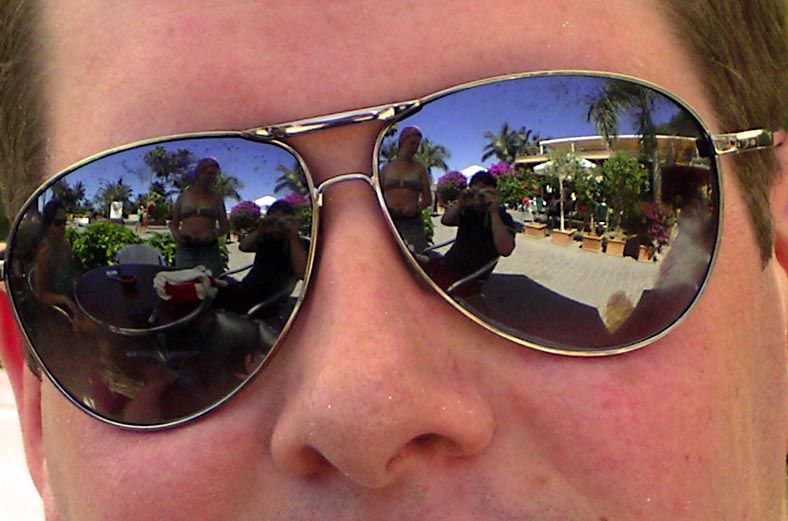 Aviator sunglassesTeardrop lenses, first made for pilots
 WayfarerTrapezoid plastic frame of 1952
 Cat eye glassesUpswept outer corners
 Browline glassesA heavy upper rim
 Rimless eyeglassesLenses with no frame front
 Horn-rimmed glassesThick frames once made of horn
 Pince-nezClipped to the nose, no arms
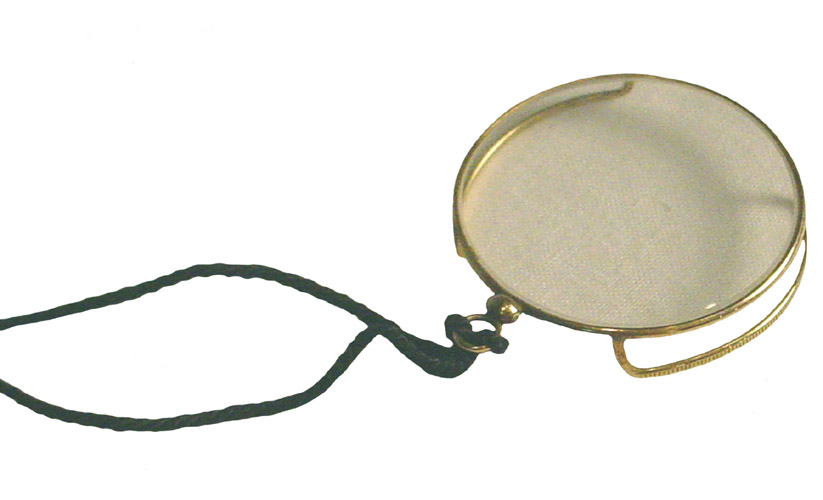 MonocleA single lens held by the brow
Further reading


Photo credits on this page
The small pictures above come from Wikimedia Commons under free licences. Some are cropped to fit.
- Sunglasses: Rich Niewiroski Jr., CC BY 2.5, source
- Rimless eyeglasses: Document1, CC BY-SA 3.0, source
- Aviator sunglasses: Paul Evans, CC BY 2.0, source
- Pince-nez: Łeba, CC BY 3.0, source
- Wayfarer: Starman1984, CC BY-SA 3.0, source
- Cat eye glasses: Smithsonian Institution, No restrictions, source
- Monocle: Sobebunny, CC BY-SA 3.0, source
- Browline glasses: Piercetheorganist at English Wikipedia, Public domain, source
- Horn-rimmed glasses: User:Robin Clement, CC BY-SA 3.0, source