Adornment
The bindi, the nath and other nose rings, the tilak, piercings and face jewellery. 35 face guides on EveryFaceShape so far.
Face adornment is what people wear on the face for faith, celebration or beauty: the bindi and tilak on the forehead, the nath and the nose stud, sindoor in the hair parting, and piercings of the lip, brow and septum. Many of these belong to particular faiths and communities and carry deep meaning. EveryFaceShape describes them as tradition, naming their origins, with respect.
The forehead and parting
The bindi, from the Sanskrit for "point", is worn by Hindu and Jain women and as fashion by many others in South Asia. The tilak marks a Hindu worshipper, its shape often showing tradition: the urdhva pundra of Vaishnavas, the tripundra of Shaivas, a red line of kumkum. Sindoor in the parting marks a married woman in many Hindu communities, applied first by the groom at the wedding.
Nose and lips
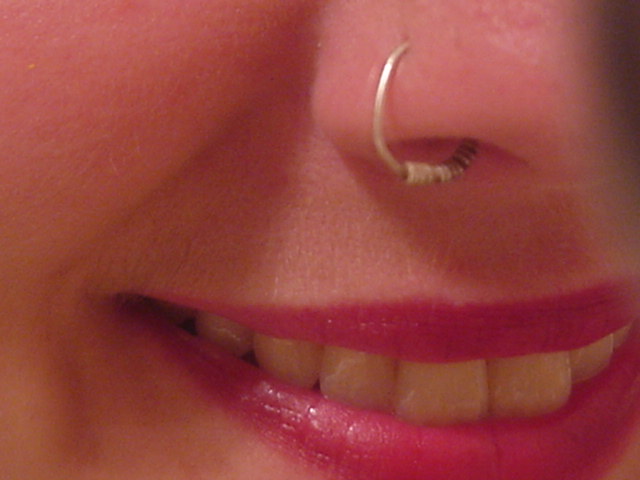
Nose piercing is old in South Asia, the Middle East and Africa; in India the small stud and the bridal nath are worn by millions. Septum rings are worn in Nepal and among some Indian communities, and across many Indigenous cultures. Lip ornaments, labrets, were worn by Aztec nobles and Tlingit women, and Mursi women of Ethiopia wear lip plates. Western piercing fashions spread from the 1990s.
Famous adornment face guides




Further reading
Nothing matches those filters yet. Take one off, or check back: new pages are written every day.
Photo credits on this page
The small pictures above come from Wikimedia Commons under free licences. Some are cropped to fit.
- Bindi: Vinay Sahay, CC BY-SA 4.0, source
- Nose jewellery: Etan Doronne @ www.myindiaexperience.com, CC BY-SA 3.0, source
- Nose piercing: Marie Richie, CC BY 2.0, source
- Tilaka: Robert Vane Russell (1873-1915), Public domain, source
- Sindoor: Masum-al-hasan, CC BY-SA 3.0, source
- Labret: Metalhead64, CC BY-SA 3.0, source
- Eyebrow piercing: Jonny, CC BY 3.0, source
- Kumkum: Thamizhpparithi Maari, CC BY-SA 3.0, source