Face tattoos and markings
Tā moko, the facial tattoos of the Apatani and Chin, and ritual scarification, by tradition. 28 face guides on EveryFaceShape so far.
Face tattoos and markings are permanent: designs tattooed, carved, stitched or scarred into the skin. Among them are the tā moko of the Māori, the kakiniit of Inuit women, the chin and lip tattoos of Ainu women, the facial tattoos of Apatani women in Arunachal Pradesh and of Chin women in Myanmar, and the facial marks of the Yoruba. EveryFaceShape describes each by tradition, as the communities themselves explain it.
Marks of belonging
Most traditional face markings record identity: genealogy and tribe in tā moko, coming of age in kakiniit, lineage and home town in Yoruba ila, readiness for marriage in Ainu lip tattoos. Methods differ: moko was carved with bone chisels, kakiniit stitched with sooty thread, Apatani tippei pricked with thorns, and Yoruba marks cut with blades by specialists.
Suppression and revival
Many traditions were banned or discouraged by governments and missionaries: Ainu tattooing by Japan in 1871, Chin tattooing in the mid-twentieth century, Apatani marks in the early 1970s. Some are now gone except among elders. Others have revived strongly: tā moko since the 1970s and 1980s, and kakiniit since the 2000s, led by the communities themselves.
Famous marking face guides
 Tā mokoMāori face and body marking
 Face tattooFacial tattooing worldwide
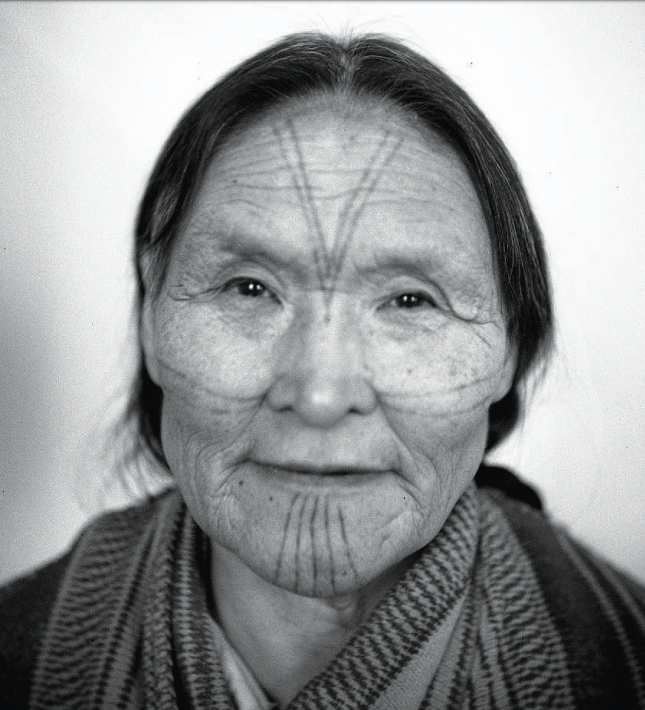 KakiniitInuit women's tattoos
 Yoruba tribal marksFacial marks of lineage and town
 ScarificationPatterns made by scarringIndigenous Tattoos of the Indian SubcontinentIncluding Apatani and Konyak marks
 Tattooing in MyanmarIncluding the face tattoos of Chin women
Further reading
Nothing matches those filters yet. Take one off, or check back: new pages are written every day.
Photo credits on this page
The small pictures above come from Wikimedia Commons under free licences. Some are cropped to fit.
- Tattooing in Myanmar: Unknown author, CC BY 4.0, source
- Tā moko: Gottfried Lindauer, Public domain, source
- Yoruba tribal marks: User:FA2010, Public domain, source
- Kakiniit: Henry Busse, Public domain, source
- Scarification: John Atherton, CC BY-SA 2.0, source