
Dimple
A small natural indentation in the flesh, most notably on the cheek.
A dimple is a small natural indentation in the flesh, most commonly found on the cheek. While often linked to attractiveness and good luck in various cultures, medical research suggests they result from variations in facial muscle structure rather than simple inheritance.
- Dimples are caused by variations in the zygomaticus major muscle.
- They are often associated with youth, beauty, and good luck.
- The University of Utah classifies them as an irregular dominant trait.
- Artificial dimple makers were sold in the early twentieth century.
- Shakespeare frequently used dimples to describe beautiful characters.
What it is
A dimple is a small natural indentation in the flesh, most notably appearing on the cheek. It is also known as a gelasin or fovea buccalis. These indentations usually show up when a person makes a facial expression, such as smiling. A chin dimple, or cleft chin, is a similar feature that remains visible without specific expressions. The appearance and depth of these features are influenced by the shape of the skull and can change over time due to age and facial development.
History and origin
Throughout history, dimples have been associated with heroism, innocence, and physical attractiveness. Ancient writers referred to them as the 'Chian laugh,' noting their ability to entice observers. In Chinese culture, they are seen as a good luck charm, while Haitian mothers historically attempted to mold indents into newborns' cheeks. Literary figures like Shakespeare frequently described dimples to signify beauty, particularly in female characters. Superstitions vary globally, with some viewing them as signs of pleasantness and others linking them to complicated romantic relationships.
What it means
Cheek dimples are widely regarded as symbols of youth and beauty. They accentuate smiles, making them appear more cheerful and memorable. Various cultures hold superstitions about them; for instance, they are sometimes viewed as good luck charms or indicators of innocence. Conversely, some proverbs suggest a connection to devilish traits or romantic complications. The perceived attractiveness has led to artificial attempts to create them, including devices like the Dimple Maker in the 1930s, though these are not medically recommended.
The science
Medical research indicates that dimples may result from variations in the zygomaticus major muscle. Specifically, a double or bifid structure of this muscle can cause the skin to dip when it contracts. While some studies suggest a genetic component, with genes potentially located on the fifth chromosome, the University of Utah describes it as an irregular dominant trait influenced by other genes. Dimples can be permanent or transient, with some appearing and disappearing as baby fat diminishes or due to aging.
Styling and care
Natural dimples require no grooming or styling. They are inherent features that become visible during facial movements. Some individuals seek surgical procedures to create artificial dimples, a practice that has gained popularity in recent decades. Historically, devices were invented to mimic the look, but these are not standard practice. The placement of natural dimples often aligns with specific facial landmarks, such as the line between the corner of the mouth and the outer eye corner, known as the KBC point.
In culture
Dimples feature prominently in literature and film as markers of attractiveness and charm. Characters like Scarlett O'Hara use their dimples strategically in social interactions. Shakespeare referenced them to denote youthful beauty and divine qualities. Public figures like Miranda Kerr and Reginald Denny have had their dimples noted in media, reinforcing their association with conventional beauty standards. The feature continues to be a subject of fascination in discussions about human anatomy and aesthetic appeal.


Questions people ask about Dimple
Are dimples inherited?
Research debates the exact inheritance pattern. The University of Utah considers dimples an irregular dominant trait, likely controlled mostly by one gene but influenced by others. Some studies suggest genes may be on the fifth chromosome, though definitive proof remains elusive.
Why do dimples appear only when smiling?
Dimples are located on mobile tissue and are caused by variations in the zygomaticus major muscle. When you smile, this muscle contracts, pulling the skin inward to create the indentation. Chin dimples remain visible without expression because they are structural lines rather than muscle-induced dips.
Can dimples disappear as you age?
Yes, dimples can be transient. A study noted that while many adults have dimples, fewer youths do, suggesting they may fade as baby fat diminishes or change with facial development. Aging can also alter their visibility due to changes in skin elasticity and muscle growth.
What is the cultural significance of dimples?
Many cultures view dimples as lucky charms or signs of innocence and heroism. In Chinese tradition, they indicate pleasantness, while Haitian mothers historically tried to mold them into infants. Literature often uses them to symbolize beauty and sex appeal, particularly in female characters.
Good reading and sources
The facts on this page come from the Wikipedia article "Dimple", written by its contributors and used under the CC BY-SA 4.0 licence, and from its Wikidata record (CC0). EveryFaceShape rewrote the text in its own words, with AI assistance, and compares every page with the article to make sure no passage is copied. It may be reused under the same CC BY-SA 4.0 licence with a link back.
It may contain mistakes, and figures change over time. Nothing here is investment or buying advice. If something is wrong, tell us. Last refreshed 2026-11-15.
Like Dimple
All skin features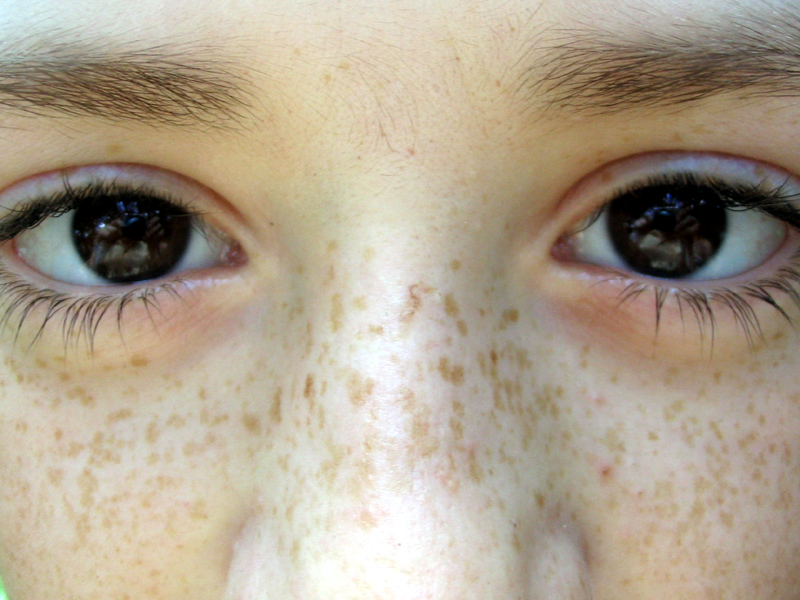 WorldFreckles
Small clusters of concentrated melanin on the skin.Skin · Most faces
 WorldBeauty mark
A dark facial mark, natural or applied, worn for adornment.Skin · Most faces
 WorldBlushing
The involuntary reddening of the face caused by emotional stress.Skin
 WorldUnibrow
A single eyebrow formed by hair meeting above the nose bridge.Brows · Most faces