
Blushing
The involuntary reddening of the face caused by emotional stress.
Blushing is a natural physiological response where facial skin turns red due to increased blood flow. It is triggered by emotions such as embarrassment or shyness and serves as an honest social signal.
- Blushing is an involuntary reddening of the face triggered by emotional stress.
- It involves increased capillary blood flow in the cheeks, forehead, and neck.
- Charles Darwin described it as the most peculiar and human of all expressions.
- Facial veins have unique structures that make them more prone to dilation.
- It serves as an honest social signal of shame or modesty.
What it is
Blushing, also known as erubescence, appears as a pink or red tint on the skin of the face. This colour change happens because capillary blood flow increases in the facial tissue. The effect typically covers the cheeks and forehead but can spread to the ears, neck, and upper chest. This specific area is often called the blush region. Unlike general flushing, which affects more of the body and lacks a mental trigger, blushing is usually linked to psychological states. It occurs without conscious control and is distinct from medical conditions like idiopathic craniofacial erythema, where strong blushing happens with little provocation.
History and origin
Charles Darwin studied this phenomenon in his 1872 work, The Expression of the Emotions in Man and Animals. He dedicated a chapter to complex emotional states, describing blushing as peculiar and distinctly human. Research into the biological mechanisms has continued since then. Studies have examined how facial veins respond differently than those elsewhere on the body. Scientists have identified specific receptors that influence blood vessel dilation during emotional stress. These findings help explain why the reaction is limited to the face rather than the whole body.
What it means
Psychologists suggest that blushing acts as a visible signal to others. When a person feels shame or embarrassment, the blush communicates that they recognise a social misstep. It conveys modesty and a desire to repair the situation. Because the reaction is involuntary, it is seen as an honest display of emotion. This honesty can strengthen social bonds by showing adherence to group norms. While the immediate experience may feel uncomfortable, the long-term benefit lies in being perceived as trustworthy and sincere by peers.
The science
The physical cause involves wider blood vessels near the surface of the facial skin. These vessels are more numerous and visible than in other areas. Research indicates that facial veins possess unique beta-adrenoceptors that aid in dilation. Blocking these receptors reduces blushing, though other vasodilator mechanisms remain active. Brain imaging links the reaction to activation in the cerebellum and the left paracentral lobe. The condition is sometimes associated with social anxiety, where individuals experience persistent fear in performance situations.
In culture
The phenomenon is recognised across cultures as a universal sign of human emotion. It appears in literature and philosophical discussions about self-awareness and social interaction. In modern contexts, it is often discussed in relation to social phobia and anxiety management. Some individuals seek medical interventions for severe cases, though the natural reaction remains a common part of daily life. It is viewed not as a flaw but as an inherent trait of human communication and emotional expression.
Questions people ask about Blushing
What causes the face to turn red?
Blushing is caused by increased blood flow through capillaries in the facial skin. Emotional triggers like embarrassment or shyness activate this response. The facial vessels are wider and closer to the surface than in other body parts, making the redness visible.
Is blushing different from flushing?
Yes. Blushing is typically triggered by psychological reasons and stays mostly on the face. Flushing is more intensive, extends over more of the body, and seldom has a mental source. They are physiologically related but distinct in their distribution and triggers.
Why do people blush?
Blushing is an involuntary reaction to emotional states such as passion, fear, anger, or romantic stimulation. Psychologists believe it signals to others that a person feels shame or modesty. This honest display helps maintain social bonds and shows awareness of social norms.
Can blushing be controlled?
No, blushing is generally involuntary and uncontrollable. While techniques exist to reduce its frequency, the reaction itself happens automatically. Severe cases linked to social anxiety may require professional intervention, but the natural reflex cannot be consciously stopped.
Good reading and sources
The facts on this page come from the Wikipedia article "Blushing", written by its contributors and used under the CC BY-SA 4.0 licence, and from its Wikidata record (CC0). EveryFaceShape rewrote the text in its own words, with AI assistance, and compares every page with the article to make sure no passage is copied. It may be reused under the same CC BY-SA 4.0 licence with a link back.
It may contain mistakes, and figures change over time. Nothing here is investment or buying advice. If something is wrong, tell us. Last refreshed 2026-11-15.
Like Blushing
All skin features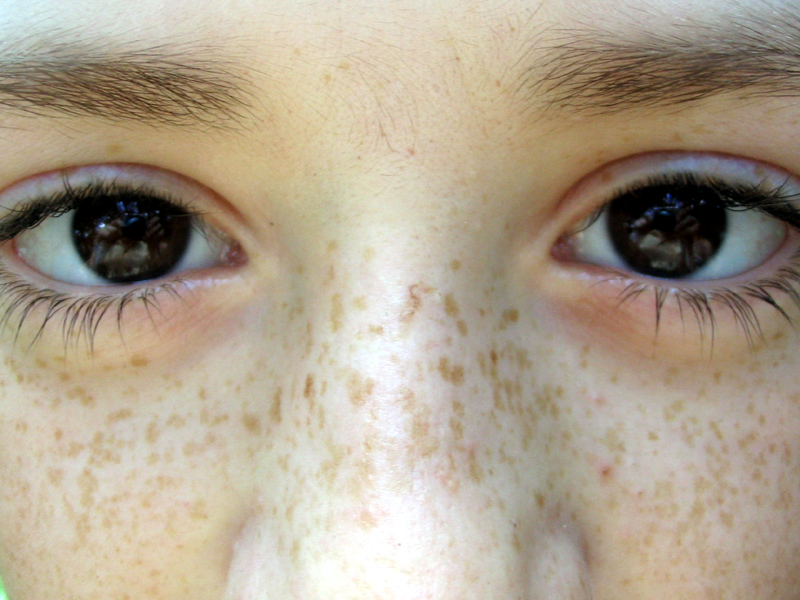 WorldFreckles
Small clusters of concentrated melanin on the skin.Skin · Most faces
 WorldDimple
A small natural indentation in the flesh, most notably on the cheek.Skin · Most faces
 WorldUnibrow
A single eyebrow formed by hair meeting above the nose bridge.Brows · Most faces
 WorldBeauty mark
A dark facial mark, natural or applied, worn for adornment.Skin · Most faces