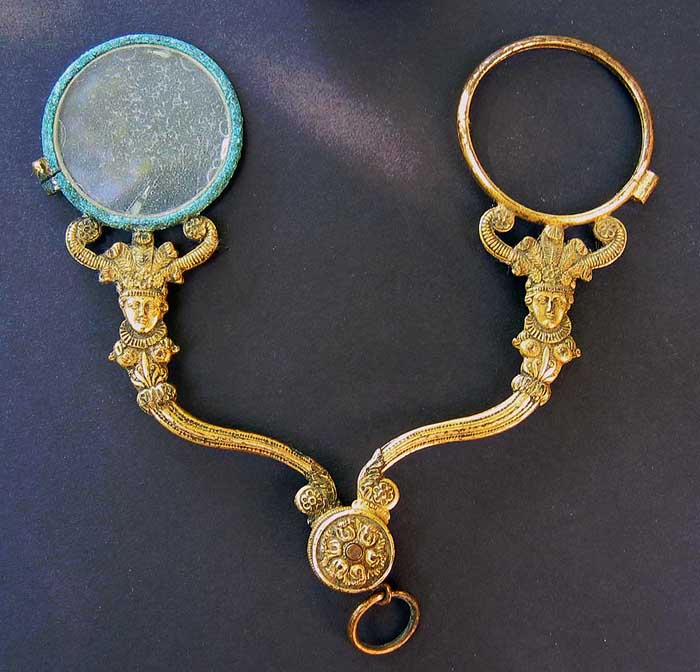
Scissors-glasses
Eyeglasses with scissoring stems and a ring for a neck chain.
Scissors-glasses are eyewear with two lenses on a Y-shaped frame that opens like scissors. They replaced the single-lens monocle to reduce eye strain. Fashionable in 18th-century France and Germany, they were worn by figures like Napoleon and Washington.
- Two lenses on a Y-shaped frame replace the single monocle.
- Stems open like scissors instead of resting on ears.
- A ring allows wearing on a ribbon or gold chain.
- Popular in France and Germany in the late 18th century.
- Used by George Washington, Lafayette, and Napoleon.
What it is
Scissors-glasses consist of two lenses mounted on a frame shaped like the letter Y. The stems open and close like a pair of scissors rather than resting on the ears. A small ring at the end allows attachment to a ribbon or gold chain. This design corrects distance vision while avoiding the fatigue associated with single-lensed monocles. The frames often feature delicate ornamentation and gilding, serving as both a functional tool and a fashion accessory.
History and origin
These glasses emerged as a solution to the limitations of the quizzing glass. By providing two lenses, they offered better vision without the strain of a single lens. Elegant examples became popular among fashionable circles in France and Germany during the second half of the 18th century. French versions were particularly ornate compared to those from other European regions. The lorgnette likely developed from this style later on.
What it means
In 18th-century society, these glasses signified status and refinement. Wealthy individuals used them as stylish accessories. The intricate designs and precious materials highlighted their owner's taste. While practical for vision correction, their primary role was social display. They allowed wearers to peer through lenses discreetly using the chain mechanism.
Styling and care
Wearers typically hang the glasses around their neck using a ribbon or chain attached to the stem ring. This keeps them accessible while not obstructing vision when not in use. The scissoring action allows easy opening and closing. Stylists of the era paired them with formal attire to complement elegant outfits.
In culture
Historical records note usage by prominent figures such as George Washington, Lafayette, and Napoleon. Their depiction in art and literature reflects their status as symbols of 18th-century elegance. The transition from monocles to these dual-lens devices marks a shift in eyewear design towards comfort and symmetry.

Questions people ask about Scissors-glasses
How do scissors-glasses differ from modern glasses?
Modern glasses rest on the ears with temple stems. Scissors-glasses have scissoring stems that open and close. They also feature a ring for a neck chain instead of ear hooks.
Why were scissors-glasses invented?
They solved the problem of eye strain caused by single-lensed monocles. Providing two lenses improved distance vision correction while reducing fatigue for the wearer.
Who wore scissors-glasses historically?
Fashionable members of French and German society in the 18th century wore them. Notable users included George Washington, Lafayette, and Napoleon.
Good reading and sources
- Scissors-glasses on WikipediaEncyclopedia
- More photos on Wikimedia CommonsPhotos
- Wikidata recordOpen data
The facts on this page come from the Wikipedia article "Scissors-glasses", written by its contributors and used under the CC BY-SA 4.0 licence, and from its Wikidata record (CC0). EveryFaceShape rewrote the text in its own words, with AI assistance, and compares every page with the article to make sure no passage is copied. It may be reused under the same CC BY-SA 4.0 licence with a link back.
It may contain mistakes, and figures change over time. Nothing here is investment or buying advice. If something is wrong, tell us. Last refreshed 2026-11-15.
Like Scissors-glasses
All eyewear frames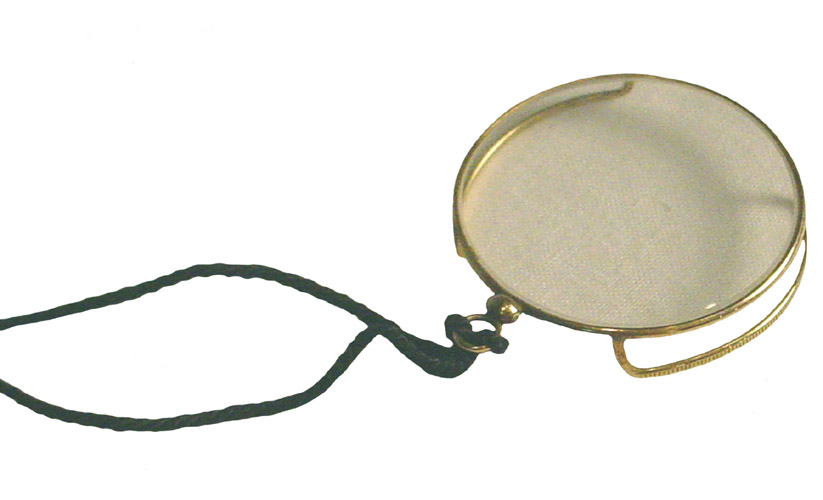 🇩🇪 GermanyMonocle
A single corrective lens held in the eye socket by one eye.Frame · Most faces · 1830
 🇬🇧 United KingdomWindsor glasses
Round metal frames with a saddle bridge.Frame · Most faces · 1840
 WorldHorn-rimmed glasses
Thick-framed eyewear imitating horn or tortoiseshell.Frame · Most faces · 1917
 🇨🇳 China and 2 moreSunglasses
Protective eyewear designed to shield eyes from bright sunlight and high-energy visible light.Frame · 1929