
Iris
The coloured ring in the eye that controls light entry.
The iris is a thin, ring-shaped muscle structure in the front of the eye. It adjusts pupil size to regulate light reaching the retina and defines eye colour through pigment density and scattering.
- Controls pupil size to regulate light entry.
- Eye colour depends on melanin and light scattering.
- Derived from Greek word for rainbow.
- Heterochromia is a rare natural variation.
- Contains sphincter and dilator muscles.
What it is
The iris is a thin, circular structure located at the front of the eye. It appears as the coloured band surrounding the central black pupil. Its primary function is mechanical: it acts like a camera diaphragm. By contracting or relaxing specific muscles, it changes the diameter of the pupil. This adjustment controls how much light enters the eye to reach the retina. The outer edge attaches to the sclera, while the inner border defines the pupil size. It consists of layered tissues, including a pigmented stroma and epithelial cells.
History and origin
The term derives from the Greek word for rainbow. This name references the goddess Iris and the wide spectrum of colours found in human eyes. While the structure itself is ancient in evolutionary terms, appearing in most mammals and birds, the linguistic link highlights its visual diversity. The anatomical understanding has grown from simple observation to detailed microanatomy, revealing complex layers such as the stroma and pigment epithelium.
What it means
Eye colour is defined entirely by the iris. This trait carries no scientific link to character or intelligence. Variations range from brown and blue to green and hazel. In some cultures, unusual patterns like heterochromia, where irises differ in colour, have historical names. For instance, Emperor Anastasius I was called dikoros for having two different coloured irises. These variations are natural biological occurrences, not markers of status or worth.
The science
Colour results from melanin pigment density and light scattering. Brown eyes contain more eumelanin, while blue eyes result from low pigment and Rayleigh scattering. The stroma and epithelial layers determine the final hue. Genetics play a complex role, involving multiple factors rather than simple dominance. Heterochromia occurs when one iris differs from the other, often as a normal variant but sometimes indicating ocular conditions. The muscles involved are smooth in mammals, allowing involuntary light response.
Styling and care
As an internal anatomical feature, the iris cannot be groomed or styled directly. Its appearance is fixed by genetics and development. Contact lenses can alter the perceived colour, but the natural structure remains unchanged. Makeup applied to the eyelids or lashes may accentuate the eye region, drawing attention to the iris colour. However, the iris itself requires no upkeep. Its shape and colour are inherent traits present from early childhood.


Questions people ask about Iris
What determines eye colour?
Eye colour is defined by the iris. It results from the amount of melanin pigment and how light scatters within the stroma. Brown eyes have high pigment, while blue eyes have low pigment, causing light to scatter.
Can you control your iris muscles?
Most people cannot voluntarily control their iris muscles. The pupil reacts automatically to light, emotion, and focus. Very few individuals can dilate or constrict pupils on command, but this offers no clear advantage.
What is heterochromia?
Heterochromia is a condition where one iris is a different colour from the other, or part of one iris differs. It is uncommon in humans but common in some animals. It can be a normal variant or sign of disease.
Good reading and sources
- Iris (anatomy) on WikipediaEncyclopedia
- More photos on Wikimedia CommonsPhotos
- Wikidata recordOpen data
The facts on this page come from the Wikipedia article "Iris (anatomy)", written by its contributors and used under the CC BY-SA 4.0 licence, and from its Wikidata record (CC0). EveryFaceShape rewrote the text in its own words, with AI assistance, and compares every page with the article to make sure no passage is copied. It may be reused under the same CC BY-SA 4.0 licence with a link back.
It may contain mistakes, and figures change over time. Nothing here is investment or buying advice. If something is wrong, tell us. Last refreshed 2026-11-15.
Like Iris
All eyes and lids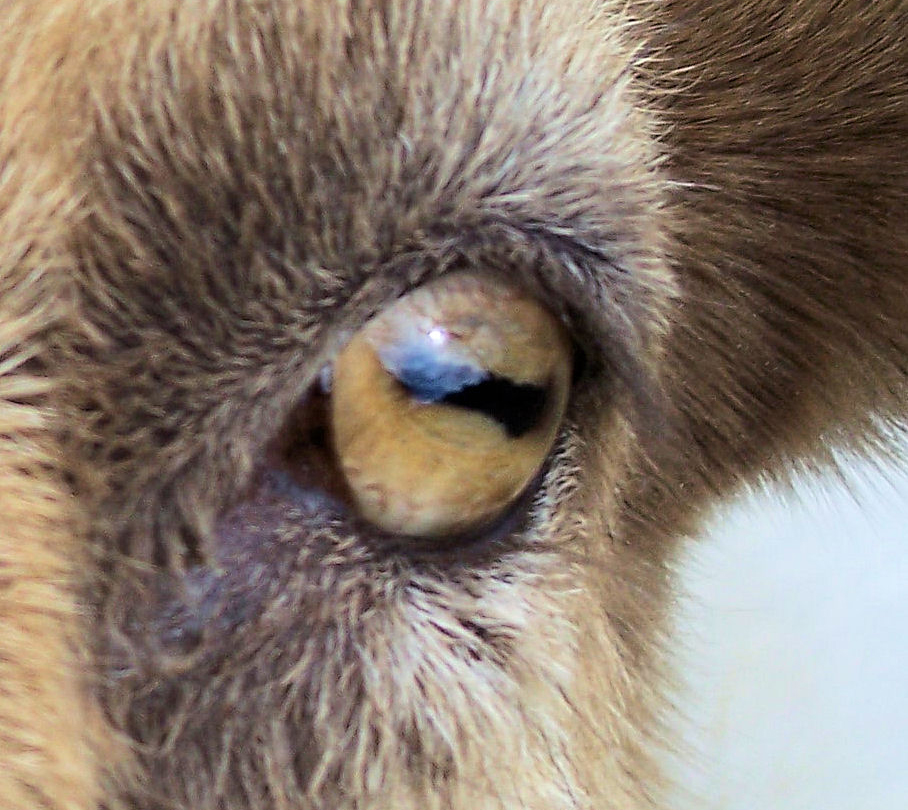 WorldSclera
The tough outer coat that creates the pale background of the eyeball.Eyes · Most faces
 WorldEyelash
Hairs lining the eyelid edges that protect the eye and frame the gaze.Eyes · Most faces
 WorldEpicanthic fold
A vertical skin fold at the inner corner of the eye.Eyes · Most faces
 WorldEye color
The natural variation in human iris hue driven by melanin and light scattering.Eyes · Most faces